
Last Updated: 09 Jul 2026
I have used both ActiveCampaign vs Mailchimp on real businesses with real email lists.
Not a demo account. Not a five-minute tour. Real campaigns, real automations, and real money going to one platform every single month.
And here is what most comparison posts will not tell you upfront: this is not a close competition in 2026.
It used to be. A few years ago, Mailchimp was a genuinely strong platform — affordable, capable, and a fair starting point for any small business getting into email marketing. That version of Mailchimp still lives in people’s memories, and it is why the name still carries weight.
But since Intuit acquired Mailchimp for twelve billion dollars in 2021, the platform has been slowly hollowed out. The free plan has been cut repeatedly. Automation has been moved behind higher-priced tiers. AI features that were promised have been quietly retired. Prices have gone up every year.
ActiveCampaign is not perfect either. The learning curve is real. The Starter plan is nearly useless for serious marketing. The November 2025 billing change for inactive contacts is a real problem.
But when you compare what each platform actually delivers for the money in 2026 — the honest answer is that ActiveCampaign wins most of the categories that matter for a growing business.
Let me break it all down.
Short on Time? Read This ActiveCampaign vs Mailchimp Quick summary
Mailchimp is the better starting point if you are completely new to email marketing and just need to send basic campaigns.
ActiveCampaign is the better tool for any business that has outgrown basic — or plans to.
Quick Comparison
| If You Want… | Choose |
|---|---|
| The friendliest setup for a complete beginner | Mailchimp |
| Landing pages included on entry-level paid plans | Mailchimp |
| SMS and social media posting in one platform | Mailchimp |
| The most powerful email automation in this price range | ActiveCampaign |
| A built-in CRM with deal tracking and pipelines | ActiveCampaign |
| 900+ automation recipes and 75+ triggers | ActiveCampaign |
| Best-in-class deliverability (94.2% inbox rate) | ActiveCampaign |
| AI that builds automation workflows from plain-language prompts | ActiveCampaign |
| Honest pricing that does not double after the first year | ActiveCampaign |
My Final Take
If you are just starting out: use Mailchimp’s free plan to learn the basics. It is genuinely useful for that.
If you are ready to build real marketing automation: ActiveCampaign. The gap in automation depth, deliverability, and CRM capability is wide enough that it justifies the higher price for most businesses that will actually use those features.
What I Tested and How
I used both platforms on real accounts — building automation workflows, testing the editors, running campaigns, and comparing the reporting side by side.
I also went through hundreds of verified reviews on G2, Capterra, and independent sources — specifically looking at long-term reviews from people who have been on each platform for six months or more. First-week reviews tell you what a tool promises. Six-month reviews tell you what it actually delivers.
Here is what I found.
Ease of Use
Mailchimp: The easiest email tool to start with
Mailchimp has spent twenty years making itself approachable for people who have never done email marketing before. It shows.
The dashboard is clean. The campaign creation flow is linear — you go step by step and it is hard to get lost. The drag-and-drop editor is intuitive enough that most people can send their first email within 30 minutes of signing up. The Creative Assistant pulls your brand colours and logo from your website and applies them to templates automatically.
For a business owner wearing multiple hats who has never touched an email platform before — Mailchimp removes almost every barrier to getting started. That is genuinely valuable, and it is the one area where Mailchimp still leads ActiveCampaign clearly.
The honest problem: Mailchimp’s simplicity has a ceiling. Once you want anything beyond basic campaigns and simple welcome sequences, the platform’s limitations start showing up fast. Multiple G2 reviewers describe hitting a wall after a few months — finding that the automation could not do what they needed, or that the features they wanted were locked behind a plan upgrade that cost significantly more.
ActiveCampaign: More to learn, more to gain
ActiveCampaign’s interface is clean and well-organised. The left sidebar navigation covers campaigns, automations, contacts, deals, and reports in a logical structure. For someone with email marketing experience, it is fast to navigate.
For a complete beginner, it is not. The automation builder — which is where ActiveCampaign’s real power lives — takes real time to learn. Most users need two to four sessions before they feel confident building sequences without second-guessing every decision. Learning Curve is the most mentioned complaint on G2, appearing in over 400 reviews.
The good news: once it clicks, it is genuinely fast. The 900+ pre-built automation recipes mean you are not starting from scratch for common use cases. The AI Automation Builder generates complete multi-step workflows from a plain-language description of what you want to accomplish. For a team that invests the upfront time — the payoff in marketing capability is significant.
Multiple experienced marketers who have used both platforms describe ActiveCampaign as the tool they wish they had started on sooner. The learning curve is real, but so is the reward on the other side of it.
Winner: Mailchimp for beginners. ActiveCampaign for anyone with some email marketing experience or who is willing to invest time upfront for a significantly more capable platform.
Email Builder
Mailchimp: The stronger visual editor

Mailchimp’s drag-and-drop email builder is genuinely one of the best in the email marketing space. The editor is fast, the blocks move cleanly, and the design output looks polished without requiring any design experience.
The Creative Assistant is the standout feature — paste your website URL and Mailchimp automatically applies your brand colours, fonts, and logo to templates. For a business that sends frequent branded campaigns and wants visual consistency without manual setup every time, this saves real time.
The conditional content feature on Standard and above lets you show different content blocks to different subscriber segments inside the same email. That is a real personalization tool — not just deciding who gets the email, but what each person sees inside it.
The honest weakness: the editor can feel sluggish on longer emails or complex nested layouts. Several Capterra reviewers mention noticeable lag when working on multi-section emails. Not a dealbreaker, but noticeable when you are editing the same email repeatedly.
ActiveCampaign: Solid editor with more automation-aware features
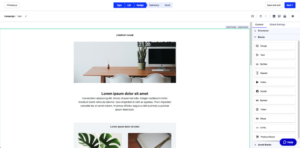
ActiveCampaign’s drag-and-drop editor is fast and functional. You can build multi-column layouts, adjust individual content blocks, add images, and customise colours and fonts without touching any code.
The AI Brand Kit works similarly to Mailchimp’s Creative Assistant — paste your website URL and ActiveCampaign pulls your brand assets and applies them to templates. The editor supports conditional content at comparable plan levels.
Where ActiveCampaign’s editor pulls ahead: predictive sending, which optimises delivery time for each individual contact based on their past opening patterns. Not time-zone optimisation — person-by-person optimisation. On larger lists, this can meaningfully improve open rates without any changes to the email itself.
Split testing goes up to five variations simultaneously with automatic winner selection. Mailchimp offers A/B testing but with fewer simultaneous variations.
Winner: Mailchimp for visual polish and the Creative Assistant. ActiveCampaign for predictive sending and multi-variation split testing. Close enough that this category does not settle the decision on its own.
Template Library
Mailchimp: Strong library, two honest problems
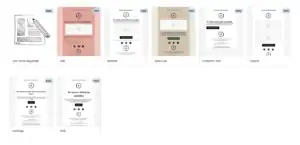
Mailchimp gives you over 100 professionally designed email templates across newsletters, promotions, event announcements, seasonal campaigns, and more. The designs are polished and the variety covers most common campaign types.
Two honest problems worth knowing:
First — some of Mailchimp’s classic templates are not mobile-responsive. The older designs that have been in the library for years can display incorrectly on phones. Always preview on mobile before sending if you are using an older template. Second — Mailchimp’s AI design features, which were promised as a major upgrade following the Intuit acquisition, have been largely demoted or quietly retired according to Zapier’s 2026 analysis. The AI assistant that was supposed to generate and optimise email designs has delivered significantly less than what was announced.
Free plan users get access to only a handful of basic templates. The full library requires a paid plan.
ActiveCampaign: 900+ templates across every business type
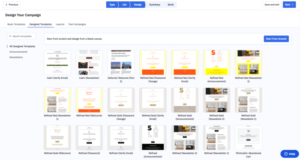
ActiveCampaign gives you over 900 email templates. That number is not inflated — they cover newsletters, promotional campaigns, lead nurture sequences, re-engagement emails, product announcements, ecommerce flows, event invitations, and more.
The library is organised by category and industry, which makes finding the right starting point fast. You can save your own branded layouts as reusable templates, so your best designs are always one click away on subsequent campaigns.
The AI email generation tool builds a draft from a plain-language prompt. The output needs editing, but it removes the blank-page problem quickly.
For businesses that send a wide variety of campaign types — not just newsletters — having 900+ starting points versus Mailchimp’s 100+ is a meaningful practical advantage.
Winner: ActiveCampaign on volume and variety. Mailchimp for visual polish on its best templates. Neither is bad — but the scale difference is real.
Automation
This is the most important section in the comparison. It is where ActiveCampaign was built to win — and where it does.
Mailchimp: Capable for basics, brutally limited at lower tiers
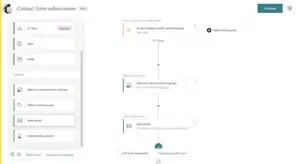
Mailchimp’s Customer Journeys builder covers the common use cases: welcome sequences, abandoned cart flows, date-based triggers, tag-based branching, and re-engagement campaigns. The interface is visual and reasonably easy to navigate.
For a small business whose entire automation need is a welcome sequence and an abandoned cart email — Mailchimp covers this adequately on the Standard plan.
The problems start at the plan level. Multi-step automation — the kind where an email leads to a decision point that leads to one of three different paths based on what a subscriber does — requires Standard at $20 a month minimum. On Essentials and below, you get basic single-step automations only. No branching logic. No conditional paths. No behavioural triggers.
Mailchimp offers fewer than 35 automation triggers. ActiveCampaign offers 75+. That is not a minor difference in the catalog — it is a fundamental difference in what you can build and how specifically your marketing can react to what people do.
Zapier’s 2026 analysis noted that Mailchimp’s automations top out at basic if/else logic with no multi-channel sequencing. That is an accurate description of the ceiling.
ActiveCampaign: The best email automation in its price range — with one honest caveat
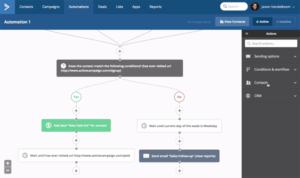
ActiveCampaign’s visual automation builder is the reason 180,000 businesses pay for the platform. It is, across independent reviews and my own testing, the most capable email automation tool available below enterprise pricing.
You can trigger workflows from email opens, clicks, website page visits, form submissions, purchases, custom field updates, tag changes, deal stage movements, and actions inside connected apps. The conditional branching supports dozens of paths inside a single automation. Goal tracking lets you define what conversion looks like and automatically move subscribers forward when they achieve it.
The 900+ pre-built automation recipes cover almost every use case a small or mid-size business would encounter. Full abandoned cart sequence, multi-touch lead nurture flow, lead scoring system, product launch sequence — all available as starting points you adapt rather than build from zero.
The AI Automation Builder is genuinely useful: describe what you want in plain language and it generates a complete multi-step workflow draft. That is a real capability, not a demo feature. ActiveCampaign’s own data shows this cut average campaign build time from 2.6 hours to 18 minutes. The exact number is hard to verify independently — but the direction is real.
The honest caveat: the Starter plan caps automations at five actions per workflow. Five. That is so restrictive it makes the Starter plan nearly useless for real marketing. Multiple reviewers describe signing up for Starter expecting to build real sequences and hitting the wall within days. Budget for Plus from day one at $49 a month — that is where the actual automation lives.
Winner: ActiveCampaign — not close. The trigger depth, conditional logic, goal tracking, and AI workflow generation are in a different league from Mailchimp’s Customer Journeys builder.
Segmentation and Contact Management
Mailchimp: Four layers of organisation and a billing trap inside
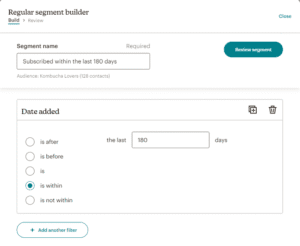
Mailchimp gives you audiences, groups, segments, and tags — four different systems for organising the same contacts.
The segmentation capability itself is decent on Standard and above. You can filter by email behaviour, purchase history, predictive demographics, location, and more. The Predictive Segmentation feature on Standard estimates customer lifetime value and purchase likelihood — useful data for prioritising who to focus on.
But the structural billing problem overshadows the segmentation quality. Mailchimp charges for every contact in your account — subscribed, unsubscribed, non-subscribed, and bounced. If the same person appears in two separate audiences, they are counted twice on your bill. The only way to remove inactive contacts from your billing is to manually archive them.
Multiple independent analyses estimate that 20 to 40 percent of the average Mailchimp account’s billed contacts are people they cannot actually email — former subscribers, bounced addresses, and duplicates across audiences. A business paying for 10,000 contacts at $155 a month may only be able to email 7,000 of them. That math hurts.
ActiveCampaign: Deep segmentation with a newer but similar billing problem
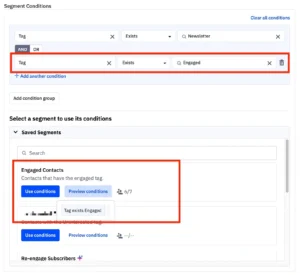
ActiveCampaign’s segmentation is excellent. You can filter by email behaviour, website visits, purchase history, tags, custom fields, lead scores, CRM deal data, and events in connected apps. The AI-suggested segment builder lets you describe the audience you want in plain language and builds the filter automatically.
The contact model is single-list-based. No confusing multi-audience structure. One contact exists once, regardless of how many tags or segments they belong to.
The honest problem: in November 2025, ActiveCampaign changed its billing for new accounts. New users are now charged for all contacts including unsubscribed, bounced, and unconfirmed. This mirrors the Mailchimp billing practice that has been widely criticised for years. Pre-November 2025 accounts are grandfathered on the old active-contact-only billing.
If you are signing up today with an existing list that has any churn history — expect your billable contact count to be higher than your emailable contact count. Actively archiving inactive contacts is the only management option, and it has monthly limits.
Winner: ActiveCampaign for segmentation depth and the single-contact model. But both tools now have the same ghost-contact billing problem — and both deserve the same criticism for it.
CRM and Sales Tracking
Mailchimp: Not a real CRM
Mailchimp has contact profiles, basic notes, and some audience data. You can tag contacts, see which campaigns they received, and segment by purchase history if you connect an ecommerce store.
What it does not have: deal pipelines, task management, sales stage tracking, lead scoring connected to sales outcomes, or any way to tie email engagement to a sales conversation.
If you have a sales team that needs to track where prospects are in a buying process — Mailchimp cannot help with that. You would need a separate CRM tool alongside it, adding cost and complexity.
ActiveCampaign: A real CRM built into the platform
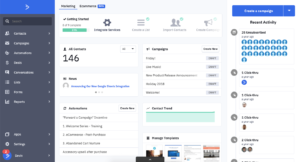
ActiveCampaign includes a built-in CRM on Plus and above. You get deal pipelines, contact scoring, task management, win probability tracking, and direct connections between email automation and deal stage changes.
A deal moving to a new stage can automatically trigger an email sequence. A contact scoring above a threshold can move them into a new pipeline. A form submission can create a new deal automatically. That tight loop between marketing and sales is what makes ActiveCampaign genuinely useful for B2B companies and service businesses that have both a marketing function and a sales function.
One honest note from independent testing: a founder who has used ActiveCampaign for twelve years across eight companies described the CRM as scoring 2.5 out of 5 — functional for automation purposes but not a replacement for a dedicated sales CRM for complex operations. It works well as a backbone for marketing-to-sales handoffs and lead scoring. It is not Salesforce.
Winner: ActiveCampaign — by default. Mailchimp simply does not have this.
Forms and Landing Pages
Mailchimp: Landing pages on all paid plans — a genuine advantage at entry level
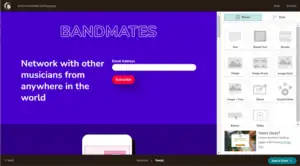
Mailchimp includes landing pages on Essentials and above, starting at $13 a month. You can publish landing pages, collect leads, and even sell products directly from them without upgrading to a higher tier.
The landing page builder is simple and easy to use. The honest limitation: there are only around ten templates to choose from. That is a hard ceiling if you send campaigns that require visually distinct pages for different offers or audiences.
Three separate form builders exist inside Mailchimp, and they work differently from each other. Multiple long-term users describe eventually abandoning the built-in form builders entirely and using third-party tools instead because the disjointed experience was too frustrating.
ActiveCampaign: More powerful landing pages, locked behind higher plans
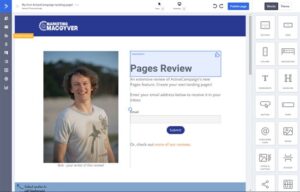
ActiveCampaign’s landing pages are available on Plus and above, starting at $49 a month. The builder is more capable than Mailchimp’s — dynamic content that shows different page versions to different visitors, a wider template selection, and a tighter connection to automation workflows.
The honest disadvantage: you are paying $49 minimum to access landing pages compared to Mailchimp’s $13. For a small business that just needs a basic opt-in page without complex personalisation — Mailchimp’s cheaper entry point is a real advantage here.
Winner: Mailchimp for landing page accessibility at a lower price. ActiveCampaign for landing page capability once you are on Plus or above.
Deliverability
This is the number that matters more than any feature list. An email that does not reach the inbox is an email that did not exist.
Independent deliverability testing from EmailTooltester puts ActiveCampaign at 94.2% inbox placement — ranking it first overall across all platforms tested in recent rounds.
Mailchimp’s deliverability scores range from 82 to 88% across different testing rounds — decent, but meaningfully lower than ActiveCampaign. The gap is partly structural: Mailchimp handles over a billion emails a day across eleven million users of varying quality. Lower-quality senders on shared IP infrastructure affect deliverability for everyone on the platform.
ActiveCampaign’s stricter account review process and dedicated deliverability infrastructure produce more consistent inbox placement. The platform also includes built-in spam testing, list hygiene tools, and an Inbox Tracker that shows where emails land across 15+ inbox providers.
In practical terms, the deliverability gap means that on a list of 50,000 contacts, ActiveCampaign delivers roughly 3,000 to 5,000 more emails to the inbox per send compared to Mailchimp. Over a year of weekly sends, that compounds into a significant amount of missed opens, missed clicks, and missed revenue.
One caveat that applies equally to both: deliverability depends as much on your own sending behaviour — list hygiene, authentication setup, engagement rates — as on the platform. A clean, engaged list on either tool beats a dirty list on both.
Winner: ActiveCampaign — the 6 to 12 percentage point deliverability gap is one of the most concrete performance differences in this comparison.
Integrations
Mailchimp: 300+ integrations, strong for mainstream tools
Mailchimp connects to over 300 apps natively. Shopify, WooCommerce, WordPress, Stripe, PayPal, Google Analytics, Facebook, Instagram — the most common tools that small businesses use are all there. Because Mailchimp has been around since 2001, most software companies built a Mailchimp integration as a default years ago.
For a small business using common, mainstream tools — Mailchimp’s integration library covers everything.
ActiveCampaign: 900+ integrations, deeper across the marketing stack
ActiveCampaign connects to over 900 apps. The library is broader than Mailchimp’s and the integrations tend to go deeper — particularly with CRMs, ecommerce platforms, and sales tools where the connection to ActiveCampaign’s automation and CRM layer creates more functionality than a basic data sync.
In late 2025, ActiveCampaign became the first email marketing platform in Claude’s official MCP partner directory — meaning it can connect with external AI tools in ways most other email platforms cannot yet.
Winner: ActiveCampaign — 900+ vs 300+ with deeper integrations across the business stack. Mailchimp is adequate for simple setups. ActiveCampaign covers more ground as your stack grows.
Multi-Channel Marketing
Mailchimp: Email, SMS, social ads, and organic social
Mailchimp goes beyond email in ways that ActiveCampaign does not match for smaller businesses.
SMS marketing is available in 12 countries as an add-on. Facebook and Instagram ad management is built in. Google remarketing ads and organic social posting to Facebook and Instagram are all available from the same dashboard.
For a small local business or retail brand that wants to run email alongside social media and SMS without managing separate tools — Mailchimp’s multi-channel breadth is a genuine advantage.
ActiveCampaign: Email, SMS, Facebook Audiences, and live chat
ActiveCampaign offers SMS as an add-on, live chat through its site messaging tool, and Facebook Custom Audiences sync — which lets you automatically add or remove contacts from Facebook ad audiences based on their email behaviour.
What ActiveCampaign does not have: native organic social posting or the same breadth of social ad management that Mailchimp offers.
Winner: Mailchimp for multi-channel breadth — SMS, social ads, and organic social posting in one place. ActiveCampaign’s Facebook Audiences sync is genuinely useful but narrower in scope.
Reporting and Analytics
Mailchimp: Good email reports, weak on the bigger picture
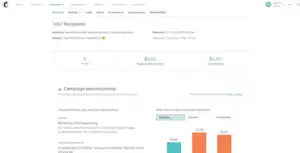
Mailchimp gives you solid email-level metrics: opens, clicks, unsubscribes, revenue per campaign for connected stores, email client breakdowns (what percentage opened in Gmail vs Apple Mail vs Outlook), and geographic data.
On Standard and above, predictive analytics and send-time optimisation add useful data for businesses trying to improve performance beyond guessing.
What Mailchimp cannot show you: how email activity connects to sales pipeline performance, which contacts are moving through a buying process, or how automation sequences are performing relative to revenue outcomes. The reporting stops at email.
ActiveCampaign: Email reporting connected to sales outcomes
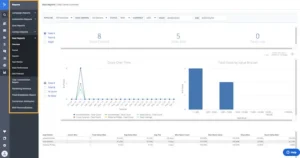
ActiveCampaign gives you standard email metrics plus automation performance reports, deal revenue tracking through the CRM, conversion attribution, and contact-level engagement history.
The practical difference: you can see which email sequences led to closed deals, not just which emails got opened. That closed-loop view — from campaign to contact to deal to revenue — is something Mailchimp simply cannot produce without a separate CRM.
On Professional and above, custom reporting lets you build dashboards around your specific metrics. That add-on starts at around $159 a month on top of the base plan — something to factor into the budget if detailed cross-campaign analytics are a priority.
Winner: ActiveCampaign for depth and sales-connected reporting. Mailchimp for clean email-level dashboards that are easier to read at a glance.
Pricing: The Full Honest Picture
This is where most comparisons bury the lead. Let me give you the real numbers.
Mailchimp Pricing
Mailchimp has four plans: Free, Essentials, Standard, and Premium.
The Free plan now supports just 250 contacts and 500 email sends a month. No automation, no scheduling, and no support after 30 days. This plan has been cut four times since the Intuit acquisition — from 2,000 contacts in 2022 to 250 today. It is barely a working tool at this point. Think of it as a product demo.
The Essentials plan starts at $13 a month for 500 contacts. You get templates, A/B testing, and basic automations. No multi-step sequences. No segmentation depth. No CRM.
The Standard plan starts at $20 a month for 500 contacts. This is where Mailchimp becomes genuinely useful. Multi-step automations, Customer Journeys, behavioural targeting, predictive segmentation, and up to 6,000 monthly sends.
The Premium plan starts at $350 a month. Multivariate testing, phone support, unlimited seats.
The first-year pricing trap:
Mailchimp’s published prices apply to the first twelve months only. After year one, prices effectively double across all tiers. This is not disclosed prominently before you sign up — most users discover it when their renewal invoice arrives.
How Standard plan costs scale:
- 500 contacts: $20 a month
- 1,500 contacts: $45 a month
- 5,000 contacts: $100 a month
- 10,000 contacts: $155 a month
- 25,000 contacts: $270 a month
Plus the ghost-contact billing on top: unsubscribed and bounced contacts count toward these limits unless you manually archive them. The real cost per emailable contact is higher than the headline pricing suggests.
ActiveCampaign Pricing
ActiveCampaign has four plans: Starter, Plus, Professional, and Enterprise.
The Starter plan starts at $15 a month for 1,000 contacts on annual billing. Automation is capped at five actions per workflow. That is genuinely too restrictive for real marketing. Treat this as a trial, not a starting point.
The Plus plan starts at $49 a month for 1,000 contacts. Full automation, CRM, landing pages, lead scoring, and SMS marketing. This is the real starting point for most businesses.
The Professional plan starts at $149 a month for 1,000 contacts. Predictive sending, site messaging, conversion attribution, split automation.
The Enterprise plan starts at $259 a month for 1,000 contacts. Custom reporting, HIPAA compliance, dedicated support.
How Plus plan costs scale:
- 1,000 contacts: $49 a month
- 2,500 contacts: $95 a month
- 5,000 contacts: $149 a month
- 10,000 contacts: $189 a month
- 25,000 contacts: $369 a month
The November 2025 billing change: new accounts are charged for all contacts including unsubscribed and bounced. Pre-November accounts are grandfathered. If you are signing up today — expect your billable count to exceed your emailable count on any list with historical churn.
Side-by-Side at the Plan Level Where Each Tool Is Actually Useful:
| List Size | Mailchimp Standard | ActiveCampaign Plus |
|---|---|---|
| 500 contacts | $20 a month | $49 a month |
| 5,000 contacts | $100 a month | $149 a month |
| 10,000 contacts | $155 a month | $189 a month |
| 25,000 contacts | $270 a month | $369 a month |
At small list sizes, Mailchimp is cheaper. At 10,000 contacts and above, the gap narrows — and when you factor in what each plan actually includes at those price points, ActiveCampaign’s value proposition improves significantly. Mailchimp Standard at $155 a month for 10,000 contacts gives you basic automation and no CRM. ActiveCampaign Plus at $189 a month for 10,000 contacts gives you the most powerful automation in this price range, a built-in CRM, and 94.2% deliverability.
If you are going to pay $155 a month anyway — paying $34 more for significantly more capability is not a difficult decision for most businesses.
Customer Support
Mailchimp: Good infrastructure, poor access for smaller plans
Mailchimp has 24/7 email and chat support on Essentials and Standard. Phone support is Premium only at $350 a month. Free plan users get 30 days of support after signup — then nothing.
The support itself gets mixed reviews. Multiple Capterra users describe slow response times, scripted replies that do not address the specific problem, and no clear escalation path. For a platform this widely used, the support quality at lower tiers is a consistent disappointment.
ActiveCampaign: Honest about its hours, better at higher tiers
ActiveCampaign offers email support on Starter, chat support on Plus, and priority support on Professional and Enterprise. The knowledge base is extensive and covers most common setup questions.
One honest note from independent reviewers: ActiveCampaign claims 24/7 support, but the actual support team operates Monday to Friday from 3am to 11pm Central Time, and Sundays from 6pm to 11pm Central. That is not 24/7. For a platform at this price, that misleading claim is worth flagging.
On Plus and above, ActiveCampaign offers free migration assistance — they handle importing your contacts and rebuilding automations when you switch from another platform. That is a meaningful practical offer, especially for businesses with complex existing setups.
Winner: Mailchimp on paper for 24/7 chat availability on paid plans — but the actual quality of that support is inconsistent. ActiveCampaign for migration assistance and support depth on higher plans. Neither platform excels at supporting its entry-level users.
Who Should Choose Mailchimp?
Mailchimp still makes sense for one type of user: the complete beginner who needs to send a basic newsletter to a small list and wants the simplest possible setup. The drag-and-drop editor is genuinely good. The templates are polished. The onboarding is the most approachable in the industry.
It also works if you need SMS and social media posting alongside email without paying for separate tools, or if your business genuinely does not need automation beyond a simple welcome email.
Who Should Choose ActiveCampaign?
ActiveCampaign is the right choice for businesses that need email to do actual work — not just sit in someone’s inbox.
The automation builder is the best in its price range. The CRM connects marketing directly to sales. The deliverability is consistently the highest in independent testing. The AI tools are genuinely useful rather than marketing fluff. And the pricing — while not cheap — is honest and does not hide a first-year promotional rate that doubles once you are locked in.
What Real Users Are Actually Saying
I went through hundreds of verified reviews on G2, Capterra, and independent sources. Here are the patterns that show up in long-term reviews.
On ActiveCampaign’s automation:
The automation builder gets genuine, sustained praise from reviewers who have been on the platform for more than a year. Users who moved from Mailchimp to ActiveCampaign consistently describe it as the moment they finally felt like their email marketing was doing something intelligent rather than just broadcasting. One reviewer on G2 described building customer journeys that react to in-app behaviour and email engagement simultaneously — something that would have required separate enterprise tools before.
On Mailchimp’s decline since the Intuit acquisition:
This pattern is consistent and documented across G2, Capterra, and independent analysis. Reviewers who have been on Mailchimp for years describe a slow but steady degradation — features moved behind paid plans, prices going up annually, AI features announced and then quietly retired. One long-term user described it as watching a good tool being slowly dismantled to extract more revenue from its existing user base.
Zapier’s 2026 analysis found that most of Mailchimp’s AI design features appear to have been demoted or quietly retired. That is a significant indictment for a platform that positioned AI as a major differentiator following the Intuit acquisition.
On ActiveCampaign’s learning curve:
The learning curve complaint is real and shows up in enough reviews to take seriously. Reviewers who came from simpler tools like Mailchimp or MailerLite describe needing two to four weeks before feeling confident. One reviewer described their team needing several training sessions to feel self-sufficient. The investment is real — and for a small business owner with limited time, it is a genuine barrier.
On Mailchimp’s billing surprises:
The contact billing trap shows up consistently. Multiple reviewers describe discovering they were paying for hundreds or thousands of contacts they could not email — former subscribers, bounced addresses, duplicates across audiences — after never receiving clear notification that this was how the billing worked. The first-year promotional pricing is also called out repeatedly as a surprise at renewal time.
My Honest Take After Testing Both
Here is where I land after testing both platforms on real accounts in 2026.
Mailchimp is the tool it used to be — except it is not anymore. The brand recognition is intact. The beginner experience is still the most approachable in the industry. But the platform underneath that brand has been quietly downgraded since Intuit took over. The free plan is nearly useless. Automation is behind a paywall. AI features that were hyped have been pulled back. Prices go up every year while features go away or get gated.
For a complete beginner who wants to send a basic newsletter to a small list and pay as little as possible while learning — Mailchimp’s free plan and its Essentials tier still make sense as a starting point. That is an honest acknowledgment of where it still works.
For anyone who has outgrown basic — or who is building from day one with the intention of doing real email marketing — ActiveCampaign is the better platform. The automation gap is real. The deliverability gap is documented. The CRM integration is something Mailchimp cannot offer. And the pricing, while higher at comparable feature levels, is honest and does not hide a doubling at year two.
The Starter plan trap is real on ActiveCampaign too. Do not sign up for Starter expecting to build real automations. Budget for Plus from day one. At $49 a month for 1,000 contacts, you are getting access to the platform that 180,000 businesses actually use — not the restricted version that makes you feel like the features you need are always one more upgrade away.
Frequently Asked Questions
Is ActiveCampaign better than Mailchimp?
For businesses that need real marketing automation — yes. ActiveCampaign’s automation depth, deliverability (94.2% vs Mailchimp’s 82 to 88%), built-in CRM, and honest pricing make it the better choice for any business that has outgrown basic email. Mailchimp is still the better starting point for complete beginners who need the friendliest possible setup.
Does Mailchimp double its prices after the first year?
Yes. Mailchimp’s published prices apply to the first twelve months. After that, costs effectively double across all tiers. This is not clearly disclosed upfront. Multiple reviewers describe the renewal invoice as a surprise.
Does ActiveCampaign charge for unsubscribed contacts?
For accounts created after November 3, 2025 — yes. New ActiveCampaign accounts are billed for all contacts including unsubscribed, bounced, and unconfirmed. Accounts created before that date are on the old active-contact-only billing.
Which has better email deliverability?
ActiveCampaign — by a clear margin. Independent EmailTooltester testing puts ActiveCampaign at 94.2% inbox placement, ranking first overall. Mailchimp scores 82 to 88% across different testing rounds. On a 50,000-contact list, that difference is roughly 3,000 to 6,000 more emails reaching the inbox per send.
Does Mailchimp have a CRM?
No — not in any meaningful sense. Mailchimp has basic contact management and audience data. It does not have deal pipelines, sales stage tracking, lead scoring connected to sales outcomes, or task management. ActiveCampaign’s CRM is available on Plus and above and connects email automation directly to sales tracking.
Is the ActiveCampaign Starter plan worth it?
For most businesses — no. The five-action automation cap makes it nearly useless for real marketing sequences. Most users describe hitting the ceiling within days. Budget for Plus at $49 a month from the start — that is where ActiveCampaign’s actual automation capability lives.
Can I migrate from Mailchimp to ActiveCampaign?
Yes. ActiveCampaign offers free migration assistance on Plus plans and above. They handle importing contacts, tags, and basic automations. Email templates need to be rebuilt. Budget one to two weeks for a full migration depending on the complexity of your existing setup.
