
Last Updated: 06 Dec 2025
I remember that day clearly — the day I finally decided to start my own newsletter.
I wasn’t looking for something complicated.
I just needed an email marketing platform that could handle my newsletter smoothly and offer a few “pro” features without overwhelming me.
Like most beginners, the first name I heard was Mailchimp.
And honestly, it made sense.
It’s the No.1 platform in terms of market share, and almost everyone recommends it as the default choice.
But while digging deeper, I came across beehiiv — a platform built specifically for newsletters, not generic marketing campaigns.
That instantly grabbed my attention.
So instead of choosing based on popularity, I decided to test both tools myself — properly.
Not just clicking around their dashboards…
But running a real newsletter,
sending real emails to real subscribers,
and growing my audience in real life using both platforms.
What you’re about to read is not theory.
It’s not feature lists copied from their websites.
This Mailchimp vs Beehiiv comparison is based entirely on my hands-on experience using both tools in real-world newsletter scenarios.
And trust me — the differences were bigger than I expected.
Let’s dive in.
Short on Time? Here’s My Quick Verdict for Mailchimp vs Beehiiv
After testing both tools across automation, forms, analytics, deliverability, AI, templates, and overall creator experience — here’s the straight-to-the-point takeaway:
Mailchimp is the more advanced platform with deeper automation, stronger data tools, and smarter AI.
It’s built for marketers who need complex workflows, detailed audience insights, and heavy optimization.
Beehiiv, on the other hand, is simpler, cleaner, and laser-focused on creators.
It shines with its writing experience, growth tools, unlimited sends, built-in monetization, and a distraction-free workflow.
Feature Breakdown — Mailchimp vs Beehiiv
| Feature | Mailchimp | Beehiiv | Winner |
|---|---|---|---|
| Ease of Use | More complex, heavier UI | Clean, simple, creator-friendly | 🏆 Beehiiv |
| Automation | Advanced & powerful | Simple but essential | 🏆 Mailchimp |
| Forms | More customization | Faster, more seamless | 🏆 Beehiiv |
| Templates | 5 basic templates on free plan | Clean, text-focused writing templates | 🏆 Beehiiv |
| Reporting | Deeper analytics | Simpler insights | 🏆 Mailchimp |
| Deliverability | Good but inconsistent | Strong & stable | 🏆 Beehiiv |
| Monetization | Limited | Built-in ads + boosts | 🏆 Beehiiv |
| AI Tools | More advanced
| super useful for newsletters
| 🏆 Mailchimp |
Final Score:
✅ Beehiiv – 11 | Mailchimp – 6**
🥇 Winner: Beehiiv — simple, clean, and built for creators.
If you want deep analytics, advanced AI, and powerful automation → go with Mailchimp.
If you want simplicity, unlimited sends, better writing tools, and faster growth as a creator → choose Beehiiv.
Ease of Use
When I started using both tools, I just wanted to know one thing:
Which one is easier for a normal person to use every day?
Beehiiv
Beehiiv felt easy from the first minute.
The dashboard is simple and neat.
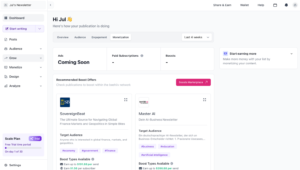
There are only a few main sections, and each one is clear. When I wanted to write, I knew where to go. When I wanted to check my audience, I knew where to click. Nothing felt hidden or confusing.
It felt like Beehiiv was made for people who want to write their newsletter without dealing with too many buttons. Most of the time, I could start working right away without thinking too much.
The only time I got stuck was when I looked for a few advanced settings. They were not very obvious, and I had to look around for a moment. But it wasn’t a big problem.
Overall, Beehiiv made things calm and easy for me.
Mailchimp
Mailchimp felt very different.
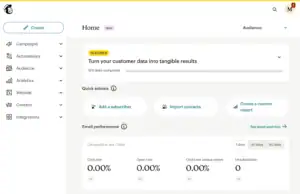
When I opened the dashboard, there were many menus and options. At first, it looked a bit crowded. Every menu had more menus inside it, and sometimes I clicked into a page that had even more buttons. Because of this, I often stopped and thought:
“Where did they put this option?”
Mailchimp has a lot of features, and that’s good… but it also makes the tool harder to learn. I had to spend some time figuring out where everything was, and in the beginning, it slowed me down.
Once you learn it, it gets better, but the learning part takes time.
My Verdict
After using both platforms in real life:
Beehiiv is easier and more simple to use.
Mailchimp has more features, but it feels crowded and takes longer to learn.
So for ease of use, my score is:
Beehiiv – 1
Mailchimp – 0
Email Editors
When I first opened Beehiiv, it felt like stepping into a clean room where everything is already in the right place.
No extra buttons. No confusion. Just a simple space to write.
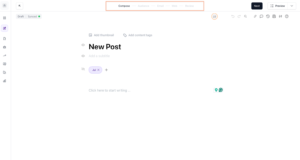
The editor is straightforward — text, images, and a few basic elements you can adjust. If you ever want to go a little deeper, there’s a small code block option, but you never feel forced to use it.
What I liked the most was the clear step-by-step bar on the top.
You move from writing, to audience settings, to email setup, to web options, and finally to review.
It’s almost like Beehiiv is holding your hand and guiding you through the whole process. I never felt lost, and nothing distracted me while writing.
Even their sign-up page editor is simple. Three sections — the email box, a place for testimonials, and your top posts. If you don’t want something, you just turn it off. No hunting around.
Then I switched to Mailchimp, and the vibe changed.
Mailchimp gives you two editors.
The Classic Builder is great if you’re someone who likes to code or add RSS feeds.
The New Builder looks fresher and has useful tools like undo/redo and small tips to improve your email.
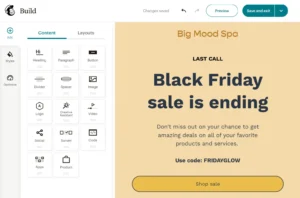
The editor itself is powerful, but sometimes I had to pause and think,
“Wait… where did that setting go again?”
Things move around, and some options hide behind menus. Once you get used to it, it’s fine… but Beehiiv was easier right from the start.
Mailchimp even has a landing page editor, but it’s kept in a different place, so you need to click around a bit to find it. After that, it works well.
In the end, both tools helped me.
Beehiiv kept things simple and calm.
Mailchimp gave more control but also more small headaches.
So for this round:
Beehiiv – 2
Mailchimp – 1
Templates & Designs
When I opened Beehiiv’s templates for the first time, I wasn’t expecting much — and that’s exactly what I found.
They don’t offer a big variety. The designs are very text-focused, clean, and simple. But here’s the thing: they actually work well for informational newsletters.
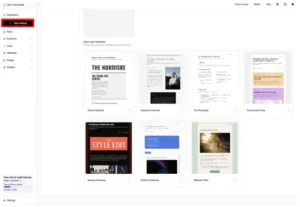
If your whole goal is to write, tell stories, and send content without adding tons of visuals, Beehiiv’s default style fits perfectly.
And the good part?
You get this clean text layout even on the free plan, and it doesn’t look cheap or messy. It has that modern “Substack-style newsletter” vibe, and honestly, it’s pretty effective if you’re doing content-first email marketing.
The only downside?
If you want more styling, you’ll need to design things yourself. Beehiiv doesn’t give many ready-made options, so expect to build your own layouts and save them for later. Not a big issue if you enjoy creating, but if you’re not a design person, it will take some time.
Now let’s talk about Mailchimp.
The moment I opened Mailchimp’s template library, it felt like the complete opposite of Beehiiv.
There are a lot of options — more than 100 on paid plans — and everything is neatly arranged in categories. But on the free plan, you only get 5 pre-built templates, and I’ll be honest… they look a bit outdated. Not terrible, but not something I’d proudly send for a modern newsletter.

Once you move to a paid plan, things change.
You get access to big, beautiful, professionally designed templates — but even then, most of them are built for ecommerce. Product displays, image blocks, grid layouts… you can clearly see they’re made for online stores more than content creators.
But the newsletter templates they do have are neat, responsive, and mobile-friendly right out of the box, which saves a lot of fixing and testing. Mailchimp also gives landing page templates, pop-up forms, and embedded form designs — all ready to customize.
So overall, here’s how I felt:
Beehiiv keeps things simple but effective, especially if your focus is writing.
Mailchimp gives you more designs, but on the free plan, those templates look kinda ugly and outdated.
Still, in terms of variety and ready-to-use options, Mailchimp wins this round.
Winner: Mailchimp
Beehiiv – 2
Mailchimp – 2
Monetization Options
When I first started looking at monetization, I remember thinking,
“Okay… which platform will actually help me earn from my newsletter?”
And this is where Beehiiv really surprised me.

They clearly built their platform for people who want to grow a newsletter and make money from it. You get options like paid subscriptions, different membership tiers, sponsored posts, and even ads you can place right inside your emails. Everything is laid out in a clean, simple way, and it doesn’t feel confusing at all.
If you’re a solo creator or someone running a niche newsletter, these tools make a big difference.
You don’t need ten extra apps — you can run everything from inside Beehiiv.
But there’s one little catch…
All these nice monetization features sit behind Beehiiv’s paid plans. You won’t get the full earning potential on the free plan.
Now when I shifted to Mailchimp, the experience felt very different.
Mailchimp is great if you sell products — physical or digital. They have things like product blocks, promo code blocks, and personalized product suggestions. These things are perfect for ecommerce brands, but they don’t help much if your main goal is to make money from your newsletter itself.
And there’s another thing you need to know:
Mailchimp has very strict rules when it comes to affiliate marketing. They do allow affiliate links, but you need to follow their rules carefully. One mistake, and they can flag your account.
So when I compare both platforms in terms of earning directly from your email content, it’s pretty clear:
Beehiiv is built for creators.
Mailchimp is built for businesses.
Winner: Beehiiv — because it actually gives tools made for newsletter growth and monetization.
Beehiiv – 3
Mailchimp – 2
Audience Engagement Tools
When I started growing my newsletter, I quickly learned something important:
sending emails is easy…
but growing and keeping an audience? That’s the real challenge.
This is where Beehiiv honestly feels like a different kind of platform.
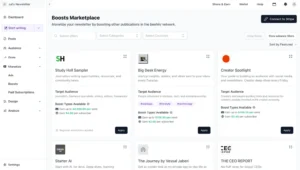
Beehiiv has built-in tools that actually help you grow your newsletter without making things complicated. The first feature that caught my eye was Boosts. It’s basically a marketplace where you partner with other creators. You set your price, and Beehiiv brings in subscribers who actually care about your content. And the best part? You only pay when someone signs up. A lot of creators say Boosts alone can increase monthly growth by a huge margin.
Then there’s the referral program.
This one is simple but powerful. You reward your subscribers for bringing more people in, and Beehiiv handles everything in the background. No coding, no setup headaches — it just works on autopilot.
And another nice thing is Beehiiv Recommendations. It works like a lighter version of Boosts. Other newsletters can recommend you, you can recommend them, and both of you grow together. It feels very community-driven, which I really like.
While Beehiiv doesn’t have discussion forums like Substack, your readers can still talk to you and each other using the comments section on your posts. So there is still a small sense of community.
Now… Mailchimp.
Mailchimp is great at many things, but when it comes to helping creators grow through collaboration or community features, it falls short.
There’s no Boosts, no referrals, no recommendations, nothing that helps you grow together with other newsletters.
If you want more subscribers on Mailchimp, you have to do everything yourself — create sign-up forms, place them on your website, share them on social media, run ads… basically a lot of manual work.
So in this part of the comparison, the winner is very clear:
Beehiiv actually helps you grow.
Mailchimp makes you do the heavy lifting alone.
Winner: Beehiiv
Beehiiv – 4
Mailchimp – 2
List Management
When it comes to managing your audience, Beehiiv actually made my life a lot easier.
They give you proper segmentation tools, so you can group people based on what they like, what they click, or how often they read your emails. It feels very natural to set up, and nothing looks confusing.
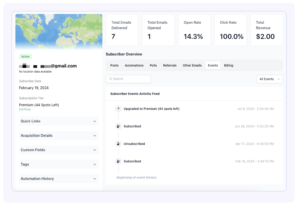
One thing I personally liked a lot was the subscriber profile dashboard.
Whenever I opened a subscriber’s profile, I could see their activity — what they clicked, how engaged they were, and how long they’ve been reading my stuff. It felt like I actually knew my audience, not just their email addresses.
Beehiiv also lets you update segments automatically or manually.
Plus, you get tags that help you sort people based on where they signed up from, what type of subscriber they are, or any custom category you want. It’s simple, and it works smoothly with a growing list.
Now… Mailchimp.
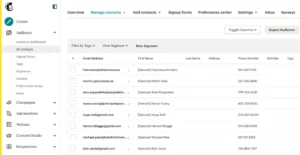
Mailchimp recommends that you create only one master list and then sort everything using tags and segments inside that list. And honestly, this gets messy. You really need to be super organized, otherwise things get out of hand very quickly.
You can create multiple lists, but here’s the problem:
If the same person joins two different lists, Mailchimp counts that as two separate contacts — which means you pay more. This alone made me very careful with how I managed things there.
Mailchimp does have one good feature though: Groups.
Groups allow your subscribers to sort themselves based on their interests. It’s a nice idea, and it can work well if your audience is diverse.
But overall?
Beehiiv felt cleaner, simpler, and more creator-friendly.
Mailchimp felt like I needed a whole system just to keep things in order — and sometimes like I’d need an assistant too.
Winner: Beehiiv
Beehiiv – 5
Mailchimp – 2
Here’s the updated Automation section with your added point — stating clearly that Beehiiv is totally enough for newsletters, you won’t feel limited, and the final score is now a tie.
Same tone. Same style. Same simplicity.
Automation
Automations are one of those things you don’t pay much attention to in the beginning…
but once your newsletter starts to grow, you suddenly realize how helpful they are. They save time, send the right email at the right moment, and keep things running even when you’re busy.
When I used Beehiiv’s automation tools, I actually liked how simple they felt.
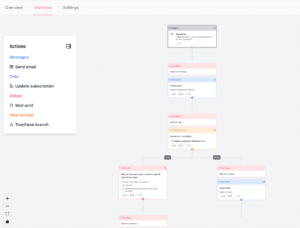
You can build multi-step journeys based on what your readers do — like signing up, upgrading to premium, filling a form, or any important action. You can add delays, add conditions, and guide people through a smooth follow-up sequence.
The whole builder looks clean, and nothing feels confusing.
And honestly? If your main goal is running a newsletter, Beehiiv gives you everything you need.
You won’t feel limited. Their automations cover all the essential paths a newsletter creator needs.
But Mailchimp… Mailchimp takes automations to another level.
They’ve been doing this for years, and it clearly shows.
Their Classic Automation handles welcome emails, date-based triggers, activity-based flows — all the basics. Then their customer journey builder lets you create super advanced workflows.
For example:
If someone opens your email → send them one path.
If they don’t → send them a different follow-up.
If they click → start another branch.
Mailchimp also gives you pre-built journeys that help you re-engage people, onboard new subscribers, or deliver special sequences without building anything yourself.
So here’s the honest truth from my experience:
Mailchimp is more powerful.
Beehiiv is simpler — but more than enough for newsletter creators.
Winner: It’s a tie.
Because if your main goal is running a newsletter, Beehiiv never feels limiting.
And if you want advanced, detailed, multi-branch automation, Mailchimp has you covered.
Beehiiv – 6
Mailchimp – 3
Deliverability
This is the part most people ignore…
until their emails start landing in spam.
And honestly, it doesn’t matter how beautiful your template is, how smart your automation is, or how well you write — if your email never reaches your readers, everything else becomes useless. So for me, deliverability is one of the most important things to look at when choosing a platform.
When I compared Beehiiv and Mailchimp, I focused on all the little things that matter for sender reputation — things like email authentication, bounce handling, spam complaints, IP warmup, and how well each platform guides you through the setup.
Here’s what I felt:
Beehiiv actually surprised me.
They cover most of the essentials you need. They help you set up authentication, they suppress bounces properly, and they even guide you through warmup so your emails don’t suddenly hit spam filters. The whole process feels modern and simple.
But… Beehiiv does miss a few things.
There’s no FBL access, no built-in list cleaning, and no proper deliverability dashboard. You don’t get a health score or a detailed panel to see how “healthy” your sending reputation is. So you need to keep an eye on things yourself.
Mailchimp, on the other hand, also does the basics well — bounce handling, complaint reports, warmup help — all good.
But the part that surprised me (not in a good way) is that Mailchimp doesn’t enforce email authentication the way they should. And for a platform this big, that felt strange. Just like Beehiiv, they also don’t offer automatic list cleaning or a proper deliverability health score.
So both platforms get the basics right…
but neither one gives a full, advanced deliverability panel.
Still, when I look at the full picture, especially how easy they made the setup:
Beehiiv feels more modern.
Mailchimp feels a bit old-school here.
Beehiiv’s authentication wizard, simple setup path, and cleaner guidance make a big difference for beginners. Mailchimp works fine, but it doesn’t push you hard enough to follow best practices.
Winner: Beehiiv
Just by a small margin, but still ahead.
Beehiiv – 7
Mailchimp – 3
Here’s the Analytics section — written in the same simple, personal, storytelling tone you’ve been using in the whole blog post. No complicated words, no robotic phrases, just your honest experience.
Analytics
I still remember the first time I opened Beehiiv’s analytics dashboard.
Everything I wanted to know was right there on the home screen — no digging, no hunting through four different menus.
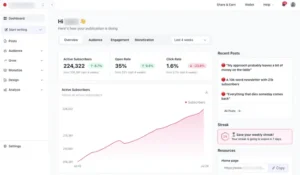
Beehiiv shows you a clean snapshot of how your newsletter is doing based on whatever date range you pick. You can switch between overview mode, audience insights, engagement metrics, or even monetization numbers without leaving the main dashboard. For me, this fast access saved a lot of time. I could check my important numbers in seconds and get back to writing.
One thing Beehiiv does really well is 3D analytics.
They made two separate panels:
- Posts Reports — how your content is performing
- Subscribers Reports — where your readers are coming from and which channels are working
These two alone give you a very clear picture of what’s working and what’s not. And there’s also a Clicks Report that helps you see which links your readers love the most. For a creator, these small things make a big difference.
But… once you compare this to Mailchimp, Beehiiv starts to feel a little light.
Mailchimp’s analytics feel like they’ve been built after years of feedback and real data from millions of users. Their marketing dashboard shows everything — open rates, clicks, revenue, bounce rates, unsubscribes — every single detail you’d want to track for each campaign.
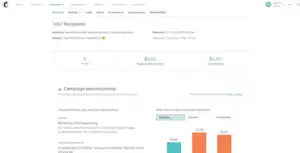
You also get deeper reports like:
- how many people forwarded your email
- which email clients your readers use
- top subscriber locations
- revenue from automation sequences
- and many more advanced numbers
And the best part?
Mailchimp lets you customize your reports.
You can drag, drop, and build a dashboard with only the metrics you care about. If you’re someone who loves detailed tracking and optimization, this is very handy.
Mailchimp also tracks analytics for landing pages, automations, and even social posts. So you get a much bigger view of your whole marketing performance, not just your emails.
So here’s my personal take:
Beehiiv gives you fast, simple, creator-focused analytics.
Mailchimp gives you deep, detailed, marketing-level analytics.
Both are good in their own lane, but Mailchimp definitely has the upper hand if you like digging into data.
Winner: Mailchimp
Updated Score:
Beehiiv – 7
Mailchimp – 4
Registration Forms
When it comes to collecting subscribers, both tools give you sign-up forms… but the feel of using them is totally different.
Mailchimp
When I first tried Mailchimp’s form builder, my reaction was pretty much:
“Okay… this is simple enough.”
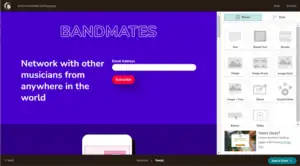
It has a drag-and-drop editor, and you get a lot of templates. You can collect things like name, birthday, gender, and all sorts of personal details. If you’re doing general marketing or running an online store, this setup can actually help.
Mailchimp also connects with almost everything — Shopify, WooCommerce, CRMs… you name it.
But here’s the part I personally didn’t enjoy:
Once you start customizing the design, it feels limited. You can change basics, but you can’t really shape it the way you want, especially if you’re building a newsletter-first brand. After a point, all forms start looking the same.
So Mailchimp forms “work,” but they don’t really feel like they belong to your newsletter brand.
Beehiiv
Beehiiv’s forms, on the other hand, feel made for creators.
When I tried their sign-up pages, the first thing I noticed was:
“Wow, this actually matches my newsletter.”
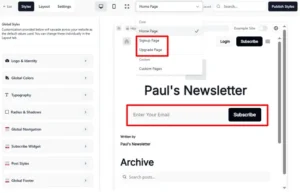
You can adjust the design much more freely, and the whole thing blends with your blog or website without looking out of place. Plus, Beehiiv automatically ties the forms into its growth tools — referrals, recommendations, even small audience polls. It feels like everything is built to help you grow faster.
One thing to know: Beehiiv doesn’t have a long list of native integrations like Mailchimp. You mostly get Zapier and API connections. But if you’re a newsletter-focused creator, you won’t really feel restricted.
If you want general, all-purpose forms with lots of data fields and e-commerce support, Mailchimp is the better choice.
But if you want your forms to look clean, match your publication, and plug into growth features that actually help you scale a newsletter, Beehiiv is hands-down better.
Winner: Beehiiv
Beehiiv takes this round because of its creator-first design and smooth branding options.
Beehiiv – 8
Mailchimp – 5
Integrations
When it comes to integrations, both tools go in two very different directions.
Beehiiv
Beehiiv keeps things simple — and honestly, that’s all most newsletter creators need.
It connects smoothly with the basics:
Bring your newsletter from platforms like Substack
Import contacts from your site or forms
Share updates easily on Discord and Slack
Nothing fancy. Nothing confusing.
Just the essentials that help you run a clean, creator-focused newsletter.
And here’s the truth:
If your entire business runs on newsletters, Beehiiv does the job perfectly. You won’t feel limited at all.
Mailchimp
Mailchimp, on the other hand, is in a different league.
With 250+ integrations, it plugs into almost everything:
CRMs
Ecommerce platforms
Payment tools
Ads and social tools
Web builders
And a lot more
If you run an online store, Mailchimp clearly wins.
Its ecommerce integrations are deep, smooth, and built for growth-focused brands.
But here’s the important part:
👉 If you don’t run an online store, Mailchimp’s huge integration list doesn’t give you any real advantage.
For creators, writers, coaches, and newsletter-first businesses?
Beehiiv already gives you everything you need.
Winner: Tie
Both tools do a good job, just in different ways.
Beehiiv gives you simple, useful integrations for a newsletter-first business.
Mailchimp gives you a huge list if you’re running a big marketing setup.
So this round is a tie.
Beehiiv – 9
Mailchimp – 5
Customer Service
Let’s be honest — when something breaks, nothing matters more than support.
Your automation stops firing.
Your DNS suddenly turns red.
Your emails stop landing in inboxes.
In those moments, the only thing that saves you is good customer service.
And this is where Beehiiv and Mailchimp take two completely different roads.
Mailchimp — Big Company, Big Support System… With Big Restrictions
Mailchimp has been around for over two decades, and naturally, it has a massive support infrastructure.
But here’s the catch: whether you actually get access to that support depends entirely on how much you’re paying.
Here’s the breakdown:
Free Plan:
You only get access to the Help Center + tutorials.
Email support? Only for the first 30 days. After that, an AI assistant is your only hope.Essentials & Standard Plans:
You unlock 24/7 live chat and email support.
Good for general help — but responses can feel generic and slow during peak times.Premium Plan:
The VIP tier — complete with phone support, priority handling, and a dedicated team.
Great… if you can justify the cost.
The truth?
Mailchimp sounds impressive on paper. Multiple channels, phone support, AI assistant, detailed documentation…
But user feedback paints a different picture.
Free and lower-tier users often feel stuck behind the AI layer, struggling to reach a real human. Even when they do, the responses sometimes feel copied, canned, and not aligned with their exact issue.
Beehiiv — Smaller Team, Faster, Friendlier, More Human
Beehiiv doesn’t pretend to be a giant corporate support machine.
And honestly, that’s a good thing.
Creators consistently praise Beehiiv for something Mailchimp can’t match:
Actual human help that doesn’t make you want to punch your screen.
Here’s how support works on Beehiiv:
Free (Launch) Plan:
You can open email/chat tickets directly from your dashboard.
And unlike Mailchimp, Beehiiv actually responds — fast.Grow & Scale Plans:
You unlock priority support, faster resolutions, and more personalized help.
User sentiment across the board?
Beehiiv’s support team is responsive, friendly, and understands newsletter creators deeply.
Yes, they sometimes use an AI chatbot to handle basic queries, but a real human takes over quickly — and those humans actually fix things.
Mailchimp may win on support quantity.
But Beehiiv absolutely wins on support quality.
Winner: Beehiiv
Mailchimp has more support channels.
Beehiiv has better support execution.
If you want quick, reliable, newsletter-focused help — Beehiiv is the clear winner.
Beehiiv – 10
Mailchimp – 5
AI Features
AI has officially stepped into the email marketing world — and both Beehiiv and Mailchimp use it, but in completely different ways.
One is built for brands that need deep data intelligence.
The other is built for creators who need speed, content, and workflow support.
Let’s break it down.
Mailchimp — AI Built for Data, Predictive Insights & E-commerce Power
Mailchimp’s AI (powered by Intuit Assist) feels like something designed for larger teams and e-commerce brands with tons of behavioral data to crunch.
Here’s what it brings to the table:
AI Text Generation (Intuit Assist):
Helps write email copy, subject lines, and campaign ideas.AI Image Generation:
Creates branded visuals using your existing brand assets.Predictive Analytics:
This is where Mailchimp shines — with tools like lead scoring, purchase probability, churn risk, and advanced behavioral insights.Send Time Optimization:
Recommends the best time to send based on historical subscriber actions.Brand Voice Support:
Limited but can attempt to match your general tone.
What’s the catch?
Most of these advanced AI features sit behind higher-tier paid plans.
Great for:
E-commerce brands, marketers who rely heavily on data, and businesses that want deep prediction-based decision making.
Beehiiv — AI Designed for Creators, Writers & Solo Publishers
Beehiiv’s AI toolkit feels like it was built by creators — for creators.
It focuses less on heavy analytics and more on helping you produce and distribute content faster.
Here’s what you get:
AI Writing Assistant:
Helps you outline, draft, rewrite, and refine content directly inside the editor.Tone & Style Control:
Lets you switch between multiple writing styles — something Mailchimp doesn’t offer.AI Image Tool:
Simple AI image generation for posts and newsletters.Audience Insights & Data Analysis:
Not as deep as Mailchimp’s predictive engine but still useful for identifying trends.AI Social Helper (Higher Plans):
Instantly repurposes your newsletter into social media posts for multiple platforms.Available Across All Paid Plans:
Beehiiv makes its AI more accessible compared to Mailchimp’s locked higher-tier features.
Perfect for:
Newsletter creators, bloggers, solopreneurs, and publishers who need help writing faster, designing visuals, and promoting their content everywhere.
Winner
Mailchimp wins for businesses that rely on deep data.
Beehiiv wins for creators who want faster writing and simpler workflows.
Beehiiv – 11
Mailchimp – 6
Who Should Use Beehiiv — and Who Should Use Mailchimp?
By now, the differences are crystal clear —
Mailchimp brings stronger AI, deeper analytics, and enterprise-style automation…
while Beehiiv is built for creators who want speed, growth tools, and a frictionless publishing workflow.
But which platform fits you?
Let’s break it down.
Choose Beehiiv if…
You’re a newsletter creator who wants a tool built specifically for publishing and audience growth.
You want clean writing tools, a powerful editor, and AI that helps you create faster.
You want built-in growth engines like Boosts, Recommendations, and referral programs.
You care about branding control and seamless design across posts, website, and forms.
You want modern features without needing enterprise-level complexity.
👉 Best for creators, solo publishers, bloggers, and media-style newsletters who want simplicity, growth, and a creator-first ecosystem.
Choose Mailchimp if…
You need advanced automation with branching logic, behavioral triggers, and predictive journeys.
You rely on detailed analytics, revenue tracking, and data modeling.
You run an eCommerce brand and want predictive insights like product recommendations or purchase probability.
You value AI for big data analysis, segmentation, and optimization.
You don’t mind paying more for enterprise-grade capabilities.
👉 Best for businesses, eCommerce stores, and marketers who want deep automation, smarter AI, and advanced reporting.
✅ Mailchimp vs Beehiiv — Final Verdict (Short & Clear)
After testing both tools side-by-side, here’s the real takeaway:
👉 Mailchimp is the smarter, more advanced platform — better automation, deeper analytics, stronger AI, and pro-level reporting.
If your business runs on data, segmentation, and complex workflows, Mailchimp will take you further.
You can learn using Mailchimp by using this tutorial
But here’s the creator-friendly truth:
👉 Beehiiv keeps things beautifully simple — and that’s its superpower.
Clean writing experience, unlimited sends, creator-focused features, fast publishing, and growth tools that don’t slow you down.
So here’s the simple rule:
Want advanced automation and data depth? → Go with Mailchimp.
Want a clean, effortless newsletter workflow built for creators? → Beehiiv is the better daily driver.
If your goal is to write consistently, grow an audience, and monetize without drowning in complexity…
👉 Beehiiv is the platform you’ll actually enjoy using.
