
Last Updated: 12 Apr 2026
Vinayak Sharma | April 13, 2026 | Email marketing tool, Kit, Substack
Last Updated: April 13, 2026
This one comes up a lot.
A writer starts thinking about building an email audience. They do some research. Two names keep coming up: Kit and Substack. Both are built for creators. Both are popular. Both have free plans.
But here’s the thing — these two tools are not really in the same category.
Substack is a publishing platform. It’s built for writers who want to write, publish, and get paid. It’s as simple as a tool can possibly be. You sign up, start writing, and your words go straight to people’s inboxes. No setup, no learning curve, no technical headaches.
Kit (formerly ConvertKit) is an email marketing platform built for creators. It’s for people who want to build an audience, automate their marketing, sell products, and run a real business from their email list. It has more features, more tools, and a lot more flexibility.
Both platforms have passionate fans. Both have real weaknesses. And choosing the wrong one can cost you time, money, and a lot of frustration down the road.
I’ve used both for real projects. I’ve tested the editors, set up automations, looked at the analytics, dug into the pricing, and read through hundreds of real reviews from people who use these platforms every single day.
Here’s everything I found — honest, simple, and no fluff.
Let’s get into it 👇
We Keep Things Simple — We Only Review Tools We Actually Use
At Mailotrix, we don’t look at a tool’s website and call it a review. I actually sign up and use every tool myself. I build automations, run real campaigns, check if emails land in inboxes, and test everything until I know exactly what works and what doesn’t.
I also spend hours reading real reviews on G2, Capterra, Trustpilot, Product Hunt, and Reddit. I want to know what normal people think — not just what the company says about itself. Then I mix that with my own experience and give you a straight, honest answer.
Short on Time? Here’s My Quick Verdict
After testing both platforms for weeks, here’s the simple truth:
Kit is the more powerful tool for creators who want to build a real business — with automation, segmentation, and full control over their audience.
Substack is the simpler, completely free platform for writers who just want to write and get paid — without touching a single setting or learning any marketing.
| Feature | Kit (ConvertKit) | Substack | Winner |
|---|---|---|---|
| Email Editor | Text-first, more flexible and customizable | Plain text, distraction-free, very limited | Kit |
| Design & Templates | About 20 templates, more design control | No templates, no design options at all | Kit |
| Automation | Advanced tag-based workflows, sequences | No automation at all | Kit |
| Segmentation | Deep tag-based system, very powerful | Only free vs paid subscriber split | Kit |
| Forms & Landing Pages | Unlimited forms and landing pages | Basic sign-up page, no real landing pages | Kit |
| Deliverability | Strong, 99.8% claimed rate | Generally solid but welcome emails often fail | Tie |
| Reporting & Analytics | Basic but improving with Kitlytics | Basic open, click, and subscriber stats | Tie |
| Customer Support | Mixed — sometimes great, sometimes terrible | Chatbot-only, very poor for real problems | Substack |
| Integrations | 90+ native integrations + Zapier | No API, no integrations, completely closed | Kit |
| Pricing & Monetization | Free for 10K subs / Paid: $39/month for 1K | Always free / Takes 10% of all subscription revenue | Substack |
| Community & Discovery | Creator Network (cross-promotion) | Notes, Recommendations, comments, built-in social | Substack |
Final Score: Kit 6 – Substack 3
👉 My Final Take:
If you’re a creator who wants powerful tools, automation, and full control over your business — Kit is built for you.
👉 Get Kit for Free (Up to 10,000 Subscribers)
But if you’re a writer who just wants to write and get paid as simply as possible, with zero upfront cost — Substack is a genuinely great place to start.
Email Editor: Which One Makes Creating Emails Easier?
The email editor is where you’ll spend most of your time. Let’s see how these two tools handle it.
Kit’s Email Editor
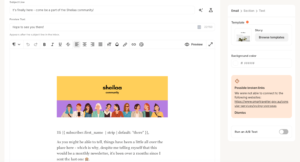
Kit’s editor is simple and text-first — built on the idea that plain, personal-feeling emails get better results than flashy ones. When I used it, it felt like writing in a clean notes app. You can add:
- Text blocks
- Images
- Buttons
- Product links
- Countdown timers (using / commands)
The editor is clean and easy to look at. And while it’s not a full drag-and-drop builder, you have more control than you might expect. You can change fonts, add columns, adjust spacing, and tweak the layout in ways that make your newsletter feel like yours — not just a default template.
Kit also added Snippets — reusable pieces of content and text you can save and drop into any email with one click. If you use the same call to action or sign-off in every email, this saves real time.
Real users have strong feelings about the editor:
“The email editor is clean and distraction-free. I write newsletters, not marketing emails — and Kit nails that.” (G2)
“The template builder can be clunky — sometimes super hard to select the element you need.” (Capterra)
“Kit’s editor is far more flexible than Substack. You can tweak layouts and format elements and build branded emails.” (EmailTooltester)
Substack’s Email Editor
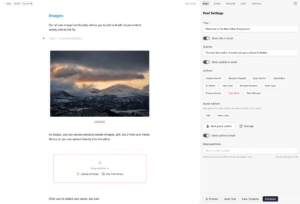
Substack’s editor is the most stripped-down writing experience you’ll find in any email tool. It genuinely feels like a blank page. You open it, you type, you hit publish.
You can add basic formatting — bold, italic, headings, bullet points. You can add images, embed videos, and drop in audio clips. That’s about it.
There are no design options. No color choices. No font changes. No layout tweaks. Every Substack newsletter looks pretty much the same. That’s the whole point — Substack believes the writing should speak for itself.
Real users feel split on this:
“The writing experience is natural and distraction-free. It lets me focus on what matters — the words.” (Product Hunt)
“It lacks any basic text formatting capabilities. You can’t insert text boxes, can’t center text, and the text dividers are terribly thin — you can barely see them.” (Product Hunt)
“Definitely wouldn’t call it fantastic. It’s simple, but not in a good way.” (Product Hunt)
My Verdict
Kit wins. You have more flexibility and control. Substack’s editor is good if you just want to write — but even then, Kit’s editor lets you write just as easily while giving you more options when you want them.
Winner: Kit (Kit 1 – Substack 0)
Design & Templates: How Much Creative Freedom Do You Get?
Kit’s Templates
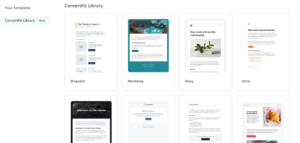
Kit gives you about 20 email templates. They’re plain and text-focused — which matches Kit’s whole philosophy of keeping emails personal. They’re not flashy, but they’re clean and professional.
You can also use custom HTML and CSS if you know how to code, giving developers full control over the look of their emails.
Kit recently introduced Snippets — reusable blocks of styled content you can drop into any email. This helps you keep a consistent look across all your campaigns without rebuilding from scratch every time.
“I like that the templates are easily customizable compared to some other builders I’ve tried.” (Capterra)
“Kit lacks in design — it doesn’t offer a huge template library.” (Capterra)
Substack’s Templates
Substack has zero templates. None.
Every newsletter on Substack uses the same layout — your header image, your words, and your footer. You can’t change the font. You can’t change the background color. You can’t add branded sections or custom layouts.
If you want to separate two sections visually, you’re limited to a thin horizontal line divider. That’s it.
This is not an accident. Substack believes design should never get in the way of writing. But for creators who want their newsletter to feel like a real brand? It’s genuinely frustrating.
“Limited design customization. Substack doesn’t allow much creative flexibility.” (TechRadar)
“If you’re looking for highly branded newsletters with custom design, you may feel constrained.” (Greenleaf Book Group)
“The visual UI/UX is clunky — image previews aren’t used well.” (TrustRadius)
My Verdict
Kit wins — it’s not close. More templates, more flexibility, and the ability to actually make your newsletter look like your brand. Substack gives you zero design control.
Winner: Kit
Score: Kit 2 – Substack 0
Email Automation: Who Makes It Easier (and Smarter)?
Automation means your emails go out automatically based on what people do — no manual work needed. This is one of the biggest differences between these two tools.
Kit’s Automation
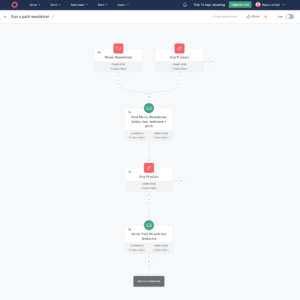
Kit’s automation is one of its strongest features. It uses Sequences (a set of emails that go out one by one over time) and Rules (if someone does X, do Y automatically).
Kit’s tag system is what makes it really powerful. When someone clicks a link, buys a product, fills out a form, or signs up through a specific page — they get a tag added to their profile. That tag can then:
- Start a new email series
- Change what content they see inside an email
- Add them to a specific group
- Trigger a product sales sequence
Kit also added several new automation features in 2025-2026:
- A/B testing inside automations — send two different versions and see which performs better
- Automation based on quiz and survey answers
- Subscriber scoring — rank people by how engaged they are
- Visual automation builder — map out your whole flow on one screen
Real users love the power:
“The tag-based automation is some of the most powerful I’ve used. I can do incredibly specific things with simple rules.” (G2)
“Sequences and tags work beautifully together. Kit treats every subscriber like an individual.” (G2)
“Visual automations run your marketing while you create. Build a welcome sequence once and it greets every new subscriber.” (Kit.com)
The one downside for beginners:
“It takes a while to understand when to use sequences vs workflows vs rules. Not beginner-friendly.” (G2)
“The free plan only lets you have one automation — that’s almost useless if you want to test anything.” (Capterra)
Substack’s Automation
Substack has no automation. Zero.
You cannot set up a welcome email sequence. You cannot trigger emails based on what someone clicks. You cannot build a product sales funnel. You cannot even schedule a drip series.
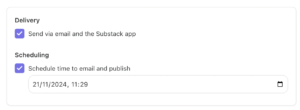
When someone subscribes to your Substack, they get a basic confirmation email. That’s it. Everything else is manual — you write it, you hit publish, and it goes out to everyone on your list at the same time.
“Substack lacks advanced features like automations, segmentation, A/B testing, and integrations with ecommerce or CRM platforms.” (Minima Designs)
“On Substack, every reader gets the same email. Kit treats every subscriber like an individual.” (Kit.com)
“We moved our business newsletter to Substack. Unfortunately, none of our paid or free subscribers were receiving our welcome emails.” (Trustpilot)
My Verdict
Kit wins by a mile. Substack has no automation at all — not even a basic welcome sequence. If automation matters to you even a little bit, Kit is the only choice here.
Winner: Kit
Score: Kit 3 – Substack 0
Segmentation & List Management: Who Handles It Better?
Segmentation means splitting your email list into groups so you can send the right email to the right person.
Kit’s Segmentation
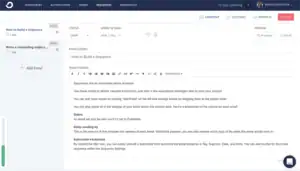
Kit keeps everyone on one list and uses tags to tell people apart. A tag is like a label that gets added to someone’s profile automatically when they do something.
With tags, you can:
- Send emails only to people with certain tags (for example, people who bought a specific product)
- Show different content inside the same email to different groups
- Start new email series based on tags being added or removed
- Score subscribers based on how engaged they are
- Build very specific segments like “signed up in the last 30 days AND clicked this link AND hasn’t bought yet”
The tag system is incredibly flexible once you learn it. For creators who want to build a real email business with multiple products, different audiences, and personalized content — this is the kind of tool that makes it possible.
“Once I got the tagging system, it became incredibly powerful. I can do really specific things.” (G2)
“ConvertKit stands out for its tagging and segmentation features. That’s where it really shines.” (Multiple comparison reviews)
Substack’s Segmentation
Substack splits your list into exactly two groups: free subscribers and paid subscribers. That’s it.
You can send an email to everyone, only to free subscribers, or only to paid subscribers. You have no other targeting options. You can’t segment by what people clicked, what they bought, when they joined, or where they came from.
This makes perfect sense for a simple newsletter focused on writing. But the moment you want to do anything more targeted — like sending a different message to people who signed up from a specific landing page — Substack can’t do it.
“Substack lacks advanced features like automations, segmentation, A/B testing.” (Minima Designs)
“The platform is very streamlined, but if you want highly custom workflows you might find it a bit inflexible.” (Rhonda Explains)
My Verdict
Kit wins easily. Substack’s segmentation is limited to free vs paid — nothing more. Kit’s tag-based system is one of the best in the creator email space.
Winner: Kit
Score: Kit 4 – Substack 0
Forms & Landing Pages: Who Helps You Grow Your List Faster?
Forms and landing pages are how you turn website visitors into email subscribers. This matters a lot for list growth.
Kit’s Forms & Landing Pages

Kit gives you unlimited forms and landing pages — even on the free plan. You get:
- Inline forms (inside blog posts)
- Pop-up forms
- Slide-in forms
- Full landing pages with customizable templates
The best Kit feature here is automatic lead magnet delivery. When someone signs up, Kit automatically sends them a free gift — like an ebook, checklist, or PDF — right after they confirm. No extra automation step needed. It just works on its own.
All your forms and pages also connect to a Creator Profile — one shareable link that shows all your active sign-up forms and pages in one place. Great for sharing in social media bios.
“The landing pages are clean and simple to set up. They work really well.” (G2)
“Automatic lead magnet delivery saved me so much time. Someone signs up and the freebie goes out instantly.” (G2)
Substack’s Forms & Landing Pages
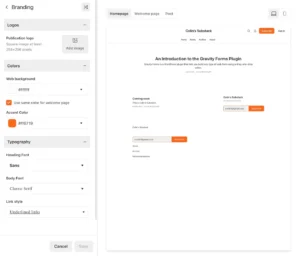
Substack gives you one thing: a sign-up page. It has your name, a short description, and a big subscribe button. That’s it.
You can’t build a proper landing page. You can’t add testimonials, images, or a sales pitch. You can’t create a pop-up form for your blog. You can’t set up a custom opt-in page with your branding.
Your Substack page is your landing page — take it or leave it.
For many new writers, this is perfectly fine. But for creators who want to grow their list from a blog, a YouTube channel, or paid ads — the lack of customizable landing pages is a real problem.
“There’s no easy way to connect Substack to other services. It doesn’t have a public API.” (Minima Designs)
“If you add a product to your suite, Substack leaves little room to grow.” (Product Hunt)
My Verdict
Kit wins clearly. Unlimited pages, unlimited forms, automatic lead magnet delivery, and a Creator Profile link. Substack gives you a single basic sign-up page with no customization.
Winner: Kit
Score: Kit 5 – Substack 0
Deliverability: Will Your Emails Actually Reach the Inbox?
Deliverability means: do your emails land in someone’s main inbox, or do they go to spam or get lost along the way?
Kit’s Deliverability
Kit claims a 99.8% deliverability rate and has a very strong reputation built over more than 10 years of sending emails for creators.
Kit covers all the important technical stuff:
- SPF and DKIM authentication so email apps know your emails are real
- Custom domain sending
- Bounce and spam complaint tracking
- DMARC setup checklists
Real users back this up:
“Kit’s deliverability has been one of its biggest strengths. Emails consistently land in the main inbox.” (G2)
“I’ve never had an issue with emails going to spam on Kit. Rock solid.” (Capterra)
“Users migrating away from Kit often cite its strong deliverability as one of the hardest things to replace.” (Multiple comparisons)
Substack’s Deliverability
Substack generally delivers emails well for its main content — the newsletters you publish and send. Most readers get them reliably.
But there’s one very well-known deliverability problem on Substack: welcome emails often don’t reach subscribers. When someone signs up for your Substack, the welcome email frequently lands in spam or doesn’t arrive at all. This is a known issue that Substack has not fully fixed.
One business newsletter owner shared this directly:
“We moved our business newsletter subscription service to Substack. Unfortunately, none of our paid or free subscribers were receiving our welcome emails.” (Trustpilot)
“They would have had five stars if they didn’t give me network issues 4 days in a row that made it completely unusable.” (Product Hunt)
Substack does not give you any control over technical email settings like custom domain authentication — it’s all handled by the platform.
My Verdict
Both platforms have strong deliverability for regular newsletters. But Substack’s known problem with welcome emails is a real issue that Kit doesn’t have. Because both have genuine strengths here, this one is a tie.
Tie — no points awarded
Score: Kit 5 – Substack 0
Reporting & Analytics: Who Gives You Better Insights?
Kit’s Reporting
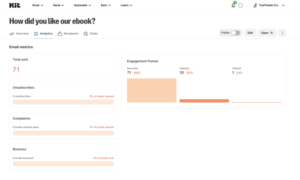
Kit gives you the basics:
- Open rates
- Click rates
- Unsubscribes
- Revenue tracking for digital product sales
In early 2026, Kit added Kitlytics — an AI feature that tries to explain why certain emails did well. It gives you tips based on your own patterns, like “your subscribers open more when the subject line is under 5 words.”
That’s a genuinely useful addition. But Kit’s core reporting screen is still thin — no click maps, no location breakdown, no device data, and no custom reports unless you’re on Creator Pro.
“The reporting tells me what happened but not really why or how to fix it.” (G2)
“I export my data to a spreadsheet to do any real analysis. Kit just doesn’t go deep enough.” (G2)
Substack’s Reporting
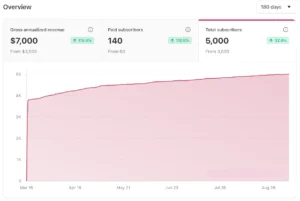
Substack gives you:
- Open rates
- Click rates
- Subscriber growth charts
- Paid subscriber revenue tracking
- Post views (web + email combined)
- Traffic source data — where your readers are coming from
For a writing-focused platform, Substack’s analytics are actually pretty solid. The subscriber growth charts are clean and easy to read. The revenue dashboard clearly shows what you’re earning. And traffic source data helps you understand which posts are bringing in new readers.
However, compared to real email marketing tools, the analytics are basic. No behavioral tracking. No segmentation by engagement level. No way to see which specific links got clicked by which subscribers. No A/B test results.
“The analytics remain relatively simple compared to advanced email marketing platforms, lacking detailed subscriber behavior tracking.” (TechRadar)
“I’m not sure it has the tools for someone who wants more than basic open and click stats.” (TrustRadius)
“Some creators report discrepancies or limits in analytics, especially for podcasts.” (Rhonda Explains)
My Verdict
Both tools have basic analytics that cover what most creators actually need day to day. Kit has a slight edge with Kitlytics but both lack depth compared to serious email marketing tools. This one is a tie.
Tie — no points awarded
Score: Kit 5 – Substack 0
Customer Support: Who’s Got Your Back?
When something goes wrong, you need support that actually helps you.
Kit’s Support
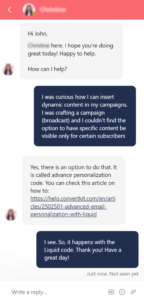
What Kit offers:
- Free plan: Email support only
- Creator plan: Email and live chat
- Creator Pro: Priority support
Kit’s support is very inconsistent. Some users rave about fast, helpful responses. Others describe days of being bounced between agents with no real solution.
Good experiences:
“Customer service replied within a couple of hours and walked me through the fix step by step.” (G2)
“Support has always been helpful and friendly every time I’ve reached out.” (Capterra)
Bad experiences:
“There’s literally no way to troubleshoot this stuff on your own. And if you’re looking for support… GOOD LUCK.” (Capterra)
“I’ve been bounced between agents for four days trying to fix a simple billing issue.” (Capterra)
“Their support is not helpful at all. After telling me migration was ‘easy,’ they refused to help when I hit problems.” (G2)
Substack’s Support
Substack’s support is almost entirely chatbot-based. When you have a real problem — a billing issue, an account problem, something technical — you are usually talking to an AI bot that reads from a script.
Getting a real human to help you is very difficult. And when it comes to billing problems specifically, users describe Substack’s support as close to useless.
“Abysmal and utterly useless support. The chatbot just regurgitates specific lines and phrases. No help at all trying to get a refund.” (Trustpilot)
“Customer chatbot support can be difficult to use.” (Minima Designs)
“I unsubscribed from a newsletter and was still charged the following month. What made it worse is that Substack support couldn’t fix it.” (Trustpilot)
“Poor subscription handling. I tried to cancel within 7 days for a full refund — nothing is happening.” (Trustpilot)
But some users have had good experiences with the platform itself when things run smoothly:
“Substack has made it easier for both writers and readers and continues to improve over time.” (Product Hunt)
“I love the mobile app experience and have discovered a supportive community of creatives.” (Product Hunt)
My Verdict
Neither platform has great support. Kit is inconsistent — sometimes excellent, sometimes a nightmare. Substack’s chatbot is almost always unhelpful for real problems. Kit at least has real human agents available on paid plans.
Substack edges it here simply because Kit’s paid support can be actively frustrating, while Substack’s free model means most users don’t expect or need much support. For writers who just want to publish with no problems, Substack causes fewer support headaches in day-to-day use.
Winner: Substack
Score: Kit 5 – Substack 1
Integrations: Do They Play Nice With Your Tools?
Kit’s Integrations
Kit connects with 90+ tools including:
- Online stores: Shopify, WooCommerce, Gumroad, Lemon Squeezy
- Course platforms: Teachable, Thinkific, Podia, Kajabi
- Payments: Stripe
- Website builders: WordPress, Wix, Squarespace
- Design tools: Canva
- Zapier — connects to 5,000+ more tools
Kit also has a well-documented API for custom connections. For creators who run a full online business — selling courses, running a membership site, connecting their blog — Kit works with almost everything they use.
“Kit lets you connect to Stripe, WordPress, Canva and more without any hassle. Having everything in one place makes it easier to manage day-to-day tasks.” (EmailTooltester)
Substack’s Integrations
Substack has no integrations. Zero.
There is no public API. There is no Zapier connection. There is no way to connect Substack to your WordPress blog, your Shopify store, your CRM, or any other tool.
Substack is completely closed. What you see is what you get — and nothing else connects to it.
This is one of the biggest limitations for creators who are building a real business. If you sell a course through Teachable, Substack has no way to know who bought it. If someone buys something from your Shopify store, Substack can’t send them a follow-up email. Every part of your business has to be completely separate.
“Substack doesn’t have a public API and it’s not open source — meaning no way for other apps or services to connect to it.” (Minima Designs)
“It doesn’t play nice with other apps. It’s hard or impossible to integrate it into anything else we use such as Notion, HubSpot, etc.” (Product Hunt)
“Substack is intended for editorial content, not conventional email marketing. Substack even calls this out on their own site.” (Minima Designs)
My Verdict
Kit wins by a landslide. 90+ integrations vs zero. If you use any other tools in your creator business, Kit connects with them. Substack connects with nothing.
Winner: Kit
Score: Kit 6 – Substack 1
Pricing & Monetization: Which One Gives You More for Your Money?
This is where Substack has its strongest argument — and it’s a good one.
Kit’s Pricing
Newsletter Plan (Free)
- Up to 10,000 subscribers
- Unlimited emails
- Unlimited landing pages and forms
- ⚠️ Only 1 automation allowed
- ⚠️ Kit shows other creators’ newsletters on your thank-you pages
Creator Plan: $39/month for 1,000 subscribers (went up from $29 in September 2025)
- Unlimited automations
- Visual automation builder
- Advanced segmentation
- Subscriber scoring
Creator Pro: $139/month for 1,000 subscribers
- Advanced deliverability reports
- Newsletter referral system
- Priority support
How prices grow with your list (Creator Plan):
| Subscribers | Kit (Creator) |
|---|---|
| 1,000 | $39/month |
| 2,500 | $49/month |
| 5,000 | $89/month |
| 10,000 | $139/month |
| 25,000 | $199/month |
On digital product sales, Kit charges 3.5% + $0.30 per transaction — which includes payment processing.
Real users are frustrated with how Kit’s price has grown:
“Kit raised prices by 35% in September 2025. Now I’m paying $39 for 1,000 subscribers.” (G2)
“The free plan is great but once you scale, it gets really expensive really fast.” (G2)
“I’m on a $290/year plan for 1,000 contacts and it doesn’t even include deliverability reporting.” (G2)
Substack’s Pricing
Substack has a completely different pricing model:
Free to use — always.
- Unlimited subscribers
- Unlimited email sends
- Full access to every feature
- No monthly fee ever
But here’s the catch: Substack takes 10% of every paid subscription you earn — plus Stripe’s standard 2.9% + $0.30 per transaction.
So if you charge $10/month for a paid newsletter:
- Substack takes $1.00 (10%)
- Stripe takes about $0.59 (2.9% + $0.30)
- You keep about $8.41
And if you earn more, you give away more. At $10,000/month in subscription revenue, Substack takes $1,000. Every single month.
Compare that to Kit’s flat fee. At $10,000/month in revenue, Kit costs $139/month for the list management — and you keep everything else.
“Substack is the only platform that gives you full access to its entire feature set for free, only taking a cut of what you actually earn.” (Really Good Business Ideas)
“For beginners, Substack is a no-brainer. But for professionals, the fees are expensive compared to flat-fee alternatives.” (SchoolMaker)
“Once you’re earning, that 10% cut adds up fast. At $10,000/month in subscription revenue, Substack takes $1,000.” (EmailVendorSelection)
Side-by-side breakdown:
| Monthly Revenue | Substack Fee (10%) | Kit Creator Plan (for 5K subs) | Who Saves More |
|---|---|---|---|
| $500/month | $50 | $89/month | Substack cheaper |
| $1,000/month | $100 | $89/month | Similar |
| $2,000/month | $200 | $89/month | Kit cheaper |
| $5,000/month | $500 | $89/month | Kit much cheaper |
| $10,000/month | $1,000 | $139/month | Kit way cheaper |
The math is clear: Substack makes sense early when you’re earning nothing. Kit makes more sense once you start earning real money.
Also worth noting: on Substack, the only way to make money is through paid subscriptions. You can’t sell ebooks, courses, one-off products, or merchandise directly through the platform. You’d need to use a separate tool for those.
Kit lets you sell paid newsletters, digital products, one-off products, tip jars, and more — all in one place.
“Substack’s monetization is great for subscriptions — but subscriptions are the only option. Want to sell ebooks or templates? You’ll need another platform.” (Minima Designs)
“As of August 2025, subscribers paying through the Substack iOS app are subject to Apple’s fees — which can be as high as 30%.” (Minima Designs)
My Verdict
Substack wins for creators who are just starting out and earning nothing — free is always better than $39/month. But for any creator earning more than $1,000/month from subscriptions, Kit’s flat fee is significantly cheaper. And Kit’s ability to sell multiple types of products gives it far more earning potential overall.
Winner: Substack (for the no-upfront-cost model)
Score: Kit 6 – Substack 2
Community & Discovery: Who Helps You Grow Faster?
This is the one area where Substack is genuinely better than Kit — and it’s a big one.
Kit’s Community Features
Kit has the Creator Network — a cross-promotion system where you can recommend other creators’ newsletters and they can recommend yours. When someone signs up for another creator’s newsletter, your newsletter might show up as a suggestion.
Kit also has a Creator Profile — a shareable page that shows your newsletter, your content, and ways to subscribe.
These are useful tools. But they’re relatively new and much smaller in scale than what Substack offers.
“The Creator Network is underrated. I’ve grown my list by thousands just from other creators recommending me.” (G2)
Substack’s Community Features
This is where Substack is genuinely special. The platform is built around a social layer that no other email tool comes close to matching.
What Substack has that Kit doesn’t:
- Notes — a Twitter/X-style feed where you post short thoughts, get discovered by new readers, and engage with other writers. Notes has become one of the best organic growth tools for newsletter creators in 2025-2026
- Recommendations — when someone subscribes to your newsletter, Substack suggests other newsletters they might like. This means other writers can send you free subscribers — and you can do the same for them
- Comments — readers can leave comments directly on your posts, creating a real community around your writing
- Leaderboards — Substack surfaces top creators in different categories, giving newer writers a chance to be discovered
- Chat — a group chat feature that lets your most engaged subscribers talk to each other and to you directly
The network effect of Substack is real. Writers inside the ecosystem can grow from each other’s audiences in a way that Kit simply doesn’t have infrastructure for.
“Substack’s Recommendations feature enables cross-promotion between compatible publications, creating organic growth within the Substack ecosystem.” (TechRadar)
“I’ve been steadily growing my audience and even became a Rising creator in my category.” (Product Hunt)
“I achieved more growth in a month on Substack than I did in 7 months elsewhere — the community just pushes you forward.” (Product Hunt)
“Notes doesn’t feel like a status competition. It’s a space where writers actually connect, share ideas, and build relationships.” (Escape the Cubicle)
But discoverability is not guaranteed:
“Discoverability remains challenging for new creators without existing audiences.” (TechRadar)
“New creators can feel daunted — Substack has cut deals with some of its most prolific writers that have moved more in the direction of traditional publishing gatekeepers.” (NoGood)
My Verdict
Substack wins this one easily. Notes, Recommendations, comments, leaderboards — Substack has built a real social network for writers. Kit’s Creator Network is useful, but it’s a much smaller ecosystem. If growing organically within a community of writers matters to you, Substack has a real structural advantage here.
Winner: Substack
Score: Kit 6 – Substack 3
What Real Users Say: Honest Reviews from G2, Capterra, and Trustpilot
I read through hundreds of real user reviews so you don’t have to. Here’s the honest truth.
What People Love About Kit:
✅ “The tag-based automation is some of the most powerful I’ve used. I can do incredibly specific things with simple rules.” (G2)
✅ “Sequences and tags work beautifully together. It’s my favorite email tool of all time.” (G2)
✅ “10,000 subscribers for free with unlimited emails. Nothing else comes close for new creators starting out.” (Capterra)
✅ “Selling digital products and running a paid newsletter in the same tool is seamless.” (Capterra)
✅ “The Creator Network is underrated. I’ve grown my list by thousands just from recommendations.” (G2)
✅ “Kit is integral because it’s the hub of the business. Everything runs through it.” (Kit testimonial — Ali Abdaal)
What People Complain About Kit:
❌ “The price jump in September 2025 was brutal. Now I’m paying $39 for 1K subscribers.” (G2)
❌ “The email editor is clunky. Sometimes super hard to select the element you need.” (Capterra)
❌ “There’s literally no way to troubleshoot this stuff on your own. And if you’re looking for support… GOOD LUCK.” (Capterra)
❌ “Reporting is way too basic. I have to export to spreadsheets to do any real analysis.” (G2)
❌ “The free plan only allows one automation — which is very limiting.” (Capterra)
❌ “I really wish I thought long and hard before signing up. It’s going to be a nightmare to switch.” (Capterra)
What People Love About Substack:
✅ “I LOVE the mobile app experience and have discovered a supportive community of creatives.” (Product Hunt)
✅ “Building in public through my newsletter has allowed me to bring customers along the journey, through workshops, surveys, and building hype around launch.” (Product Hunt)
✅ “Substack has made things easier for both writers and readers and continues to improve over time.” (Product Hunt)
✅ “The Recommendations feature is brilliant for cross-promotion. Other writers send me free subscribers every week.” (Multiple reviews)
✅ “Notes has been my best growth tool. I post 2-3 Notes daily and it’s brought in hundreds of new subscribers.” (Escape the Cubicle)
✅ “It’s easy and free to use. You don’t even need a website. Just write and publish.” (Minima Designs)
What People Complain About Substack:
❌ “Abysmal and utterly useless support. The chatbot just regurgitates lines and phrases. No help at all.” (Trustpilot)
❌ “I unsubscribed from a newsletter but was still charged the following month. Substack support couldn’t fix it.” (Trustpilot)
❌ “We moved our business newsletter to Substack. Unfortunately, none of our subscribers were receiving our welcome emails.” (Trustpilot)
❌ “It lacks any basic text formatting capabilities. You can’t insert text boxes. Text can’t be centered.” (Product Hunt)
❌ “It doesn’t play nice with other apps. Hard or impossible to integrate with Notion, HubSpot, etc.” (Product Hunt)
❌ “The only way to monetize is through paid subscriptions. Want to sell ebooks or templates? You need another platform.” (Minima Designs)
❌ “The 10% Substack fee adds up fast. At $10,000/month, Substack takes $1,000.” (Multiple comparisons)
My Personal Experience: Kit vs Substack
Using Kit
Kit has a clear purpose — it wants to be the operating system for your creator business. And once you get into it, that promise starts to feel real.
The tag system took me about an hour to fully understand. But once it clicked, I could see how powerful it was. I set up a welcome sequence that sent different content to people based on what they signed up for. I built a product sales flow that ran on its own. I tagged subscribers based on what they clicked and sent them more of what they were clearly interested in.
That kind of targeted, automated communication is something Substack simply cannot do.
But Kit frustrated me in a few ways:
- The email editor fights you when you want to do anything remotely visual
- The $39/month price tag for 1,000 subscribers felt steep, especially after the September 2025 price increase
- The free plan is generous in subscriber count but crippling in functionality — one automation is almost nothing
- Support was hit or miss. One great experience, one nightmare, no consistency
Kit is a great tool if you’re building a real business and treating your email list as a core revenue channel. But it has a learning curve, and you’ll pay for that power as your list grows.
Using Substack
My first experience with Substack was actually surprising — surprising how fast I was up and running.
I signed up. I wrote a post. I hit publish. It went to my subscribers. That whole process took about 20 minutes — and most of that was writing, not setting anything up.
Notes changed how I thought about growth on Substack. I started posting 2-3 short thoughts per day and within a couple of weeks, I was getting new subscribers from writers I’d never heard of recommending my newsletter to their audience. That’s free growth — no ads, no landing pages, no funnels.
The writing experience is genuinely enjoyable. No distractions, no buttons to click, no settings to worry about. Just writing.
But the limitations hit hard once you want to do anything beyond publishing:
- No automation means every email is manual and generic — everyone gets the same thing
- No integrations means Substack lives in its own bubble, completely disconnected from my other tools
- The 10% cut started to feel painful as my paid subscriber count grew
- The chatbot support when I had a billing issue was absolutely useless
Substack is the perfect tool for what it is — a writing platform. The moment you want it to be an email marketing tool, it runs out of road very fast.
Final Verdict: Kit vs Substack — Which One Should You Choose?
After testing both platforms, reading hundreds of real user reviews, and running real newsletters on both — here’s my honest answer:
Kit is the more powerful platform for creators who are serious about building a business from their email list.
It has better automation. Better segmentation. Real integrations. More monetization options. Lower fees at scale. And a big free plan that lets you get started without spending a cent.
But Substack is not a bad platform. It’s actually the perfect tool for a specific kind of creator — a writer who wants the simplest possible path from blank page to reader’s inbox, with a built-in community to help them grow.
The real honest truth here: these two tools are built for completely different people.
Substack asks you to trust the platform to do everything. Kit asks you to invest time in learning tools that will pay off big as your audience grows.
If you’re just starting out, have no audience yet, and want to focus 100% on writing? Start on Substack. It’s free, it’s simple, and the community can help you find readers faster than you’d expect.
But if you want automation, real segmentation, product sales, integrations, and lower fees as you scale? Kit is the clear choice — and worth every cent of the monthly fee.
Here’s the Honest Truth from Someone Who’s Tested Both:
If you want full control over your subscriber journey, automation that runs while you sleep, and tools to sell products beyond just subscriptions → Go with Kit.
If you want to start free, write without distractions, and grow inside one of the best writing communities online → Substack is the right fit.
But if you’re building a creator business and you’re thinking long-term?
👉 Kit wins.
Final Score
| Platform | Score |
|---|---|
| Kit (ConvertKit) | 6 |
| Substack | 3 |
🏆 Winner: Kit
The best part about Kit? Their free plan gives you up to 10,000 subscribers with unlimited email sends — no credit card needed. You can test the automations, build landing pages, set up your first sequence, and see exactly what Kit can do before spending a penny.
And if you’re already on Substack and thinking about switching? Kit even offers free migration on Creator and Creator Pro plans — their team imports your subscribers, rebuilds your pages, and transfers your content so you can get back to writing faster.
If you’re on the fence, start with the free plan. Worst case? You learned what you need. Best case? You found the platform that actually helps you build a business — not just a newsletter.
Have questions about Kit vs Substack? Drop them in the comments below and I’ll answer from personal experience.
