
Last Updated: 19 Jul 2026
Constant Contact vs AWeber: Honest Comparison (2026)
I have tested both of these tools on real email lists.
Not a quick sign-up and a feature tour. Real campaigns, real automations, and real time spent inside both platforms figuring out where they deliver and where they fall short.
Here is the honest context before we get into anything: this is a comparison between two tools that have both been around since the late 1990s. Constant Contact since 1995. AWeber since 1998. They built their reputations in an era when having any email marketing software at all was an advantage.
That era is gone.
In 2026 both platforms are dealing with the same fundamental problem: the market around them has moved faster than they have. Modern tools offer more automation depth, better pricing models, and cleaner interfaces at lower prices. Both Constant Contact and AWeber know this. Both have tried to respond. Neither has fully caught up.
But they have different strengths. They have failed in different ways. And for a specific type of user — the small business owner or nonprofit who values simplicity and phone support over feature depth — one of them might still be the right call.
Let me break down exactly which one it is and why.
Short on Time? Read This First
AWeber is the better tool for most small businesses and solo operators comparing these two platforms.
It has a genuine free plan. The A/B testing is more capable. The deliverability is stronger in independent testing. The price increases in December 2024 were painful — but at comparable list sizes, AWeber still tends to cost less than Constant Contact while giving you more testable features.
Constant Contact wins on one specific thing: event management. If you run regular events, collect RSVPs, and sell tickets from the same platform as your email marketing — Constant Contact has built infrastructure for that which AWeber simply does not have.
| Feature | AWeber | Constant Contact |
|---|---|---|
| Free plan | ✅ 500 contacts | ❌ No |
| Starting paid price | $15/month | $12/month |
| A/B testing | ✅ Content + subject | ❌ Subject only |
| Automation depth | ✅ Slightly more | ❌ Very basic |
| Event management | ❌ No | ✅ Yes |
| Phone support | ✅ 24/7 | ✅ Business hours |
| Template library | ✅ 600+ | ✅ 200+ |
| Affiliate marketing allowed | ✅ Yes | ❌ Restricted |
| Cancellation process | ✅ Self-service | ❌ Phone required |
| G2 support rating | 8.8/10 | 8.3/10 |
The one honest warning about both tools: Neither platform is the best value for money in 2026 compared to modern alternatives. If you are not locked into either, read to the end before you decide.
What I Tested and How
I signed up for both platforms using real accounts.
I built campaigns, created automation sequences, tested the editors and template libraries, checked deliverability data, and went through hundreds of verified reviews on G2, Capterra, Software Advice, and GetApp — specifically looking at long-term reviews from people who have used each platform for a year or more.
Here is everything I found.
Ease of Use
Constant Contact: Genuinely the simpler experience
Constant Contact’s dashboard is clean in a way that feels almost empty. Everything is where you expect it to be. Creating a campaign takes about five clicks. The drag-and-drop editor loads fast and behaves predictably.
Multiple G2 and Capterra reviewers describe getting a professional-looking campaign out the door in under 20 minutes on their very first login. The onboarding is the friendliest I have tested between these two platforms.
For a business owner managing ten other things who just needs email to work without a learning curve — Constant Contact removes every possible barrier. You sit down, you build an email, you send it.
AWeber: Functional but showing its age
AWeber’s interface is described by multiple independent reviewers as “outdated and clunky.” That is not a minor cosmetic complaint — the navigation is less intuitive than Constant Contact’s, some sections feel like they were built in different eras of the product and never fully unified, and finding specific settings takes more clicking around than it should.
AWeber has updated its interface over the past two years and the improvements are real. But it still lags behind Constant Contact on the initial experience — and significantly behind modern platforms like MailerLite or Kit.
One GetApp reviewer described the interface as complicating navigation and reducing ease of use. That matches what I found in my own testing. AWeber is learnable quickly. It is just not as smooth as Constant Contact’s very polished onboarding.
Winner: Constant Contact for ease of use — and it is the clearest win Constant Contact has in this entire comparison.
Email Builder
AWeber: More customisation, Canva integration built in
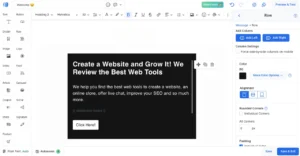
AWeber’s drag-and-drop builder covers the standard features — content blocks, images, buttons, video embeds, product blocks for ecommerce, and RSS feed blocks for content creators who want to automatically share their latest posts. The Canva integration is built in, meaning you can design visuals in Canva and pull them directly into AWeber without downloading and re-uploading files.
The AI writing assistant is available on all paid plans — not gated behind higher tiers. It generates subject lines, body copy, and content ideas from a plain-language prompt. Multiple reviewers describe it as genuinely cutting down email creation time, particularly for solo operators who write all their own copy.
The honest limitation: the editor itself feels dated. The customisation options are limited compared to modern tools. Multiple Capterra reviewers describe design templates as feeling a bit limited and say that advanced customisation requires more effort than it should.
Constant Contact: Simpler builder, same design ceiling

Constant Contact’s builder is easier to use but offers similar — and arguably less — design flexibility. You can change content within blocks cleanly, but restructuring layouts or going beyond what the template structure allows requires more work than the platform makes obvious.
The AI tools inside the editor are functional but generic. Subject line suggestions work reasonably well. Email copy assistance produces output that needs heavy editing before it sounds like a real person wrote it.
A graphic designer on Capterra described Constant Contact’s formatting as outdated and said they would like to see more trendy design. That sentiment mirrors what AWeber users say too. Both editors are functional. Neither is impressive by 2026 standards.
Winner: AWeber — slightly more content block variety, Canva integration, and AI writing tools on all paid plans without a tier gate.
Template Library
AWeber: 600+ templates — the largest library in this comparison
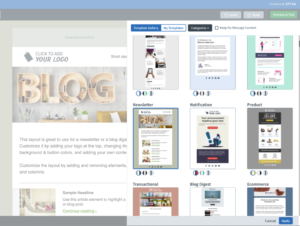
AWeber’s template library has been one of its flagship strengths for years. Over 600 professionally designed email templates covering newsletters, promotions, announcements, seasonal campaigns, and more.
Multiple independent reviewers specifically call out the template library as AWeber’s strongest competitive advantage. One review from EmailPlatformGuide described it as “unmatched.” For a small business that needs a wide variety of starting points and does not want to build from scratch — 600+ is a meaningful number.
The honest caveat: quantity does not equal quality. Some of AWeber’s older templates carry the same dated design aesthetic that plagues both platforms at this price point. But the sheer volume means you have more options to find something that works.
Constant Contact: 200+ templates, clean but limited
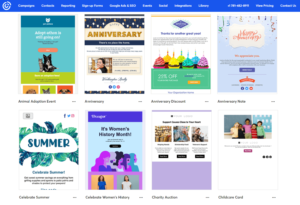
Constant Contact gives you over 200 templates. They are well-organised by campaign type and industry. The designs are clean.
But at 200 versus AWeber’s 600+, there is a meaningful difference in how long it takes to find a starting point that matches what you actually need — and how often you end up building something yourself because the library does not quite cover your use case.
Multiple Capterra reviewers describe wishing there were more template options. That frustration makes sense when you see what AWeber offers at a comparable price point.
Winner: AWeber — the template library is three times the size. For a platform where design flexibility is already limited, having more starting points matters.
Automation
Both of these platforms have basic automation. Neither has what most modern email marketers would consider advanced. This is the category where both tools are most clearly showing their age.
AWeber: Slightly more depth, still fundamentally limited
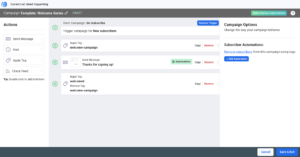
AWeber’s automation builder supports welcome sequences, drip campaigns, and follow-up sequences based on subscriber actions. You can set up conditional logic on the Plus plan — IF a subscriber clicks a link, do this; IF they do not, do that. The visual workflow builder is more capable than Constant Contact’s.
But multiple independent reviewers describe the automation as lacking complex multi-step workflows or conditional triggers that modern platforms offer as standard. Cart abandonment automation for ecommerce is weak or absent. There is no cross-channel triggering from website behaviour, purchase history, or app events.
The Lite plan limits you to three automations and three landing pages. Meaningful automation requires Plus.
Constant Contact: Even more basic, even harder to justify

Constant Contact’s automation is essentially linear drip sequences. Welcome email, wait a few days, follow-up email. Birthday emails based on a date field. Anniversary emails.
There is no conditional branching at all on the Lite or Standard plans. IF someone clicks this link, send them a different email — that logic does not exist. The platform cannot react differently to what individual subscribers do.
To get any real automation capability on Constant Contact, you need the Premium plan at $80 a month and above. And even then, the logic depth is less than what AWeber offers on Plus.
Winner: AWeber — it is a win against a low bar, but AWeber’s conditional logic on Plus genuinely pulls ahead of Constant Contact’s linear-only approach. Neither platform is a serious automation tool by modern standards.
💡 If automation is important to your business — both of these platforms will frustrate you. MailerLite includes full multi-step automation with conditional branching from its free plan at $0 to start, or $10 a month when you go paid.
Segmentation and Contact Management
AWeber: Basic but functional
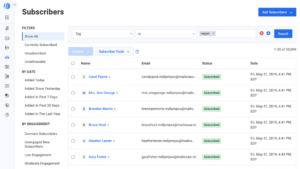
AWeber lets you tag contacts, create segments based on tags and engagement data, and organise subscribers into lists. The segmentation conditions are basic — you can filter by tag, signup date, email engagement, and some custom field data.
The Plus plan adds more advanced segmentation options. On Lite you are limited to one segment — a real constraint for any business trying to target more than one sub-group of their list.
Constant Contact: Similar depth, similar problems
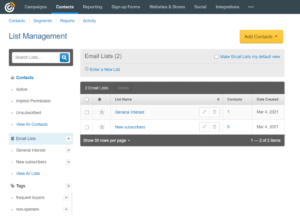
Constant Contact’s segmentation is comparable to AWeber’s at equivalent plan levels. One segment on Lite, ten on Standard. The conditions cover basic attributes and engagement data.
The honest shared problem between both platforms: neither offers behavioural segmentation driven by website activity, purchase patterns, or cross-channel data without connecting third-party integrations. Both charge you for every contact in your account whether you email them or not. Neither has built-in list cleaning tools. As your list grows and accumulates inactive contacts, your bill climbs whether those contacts are engaging or not.
Winner: Tie — both platforms have comparable segmentation depth and the same ghost-contact billing problem. Neither is meaningfully better than the other here.
Forms and Landing Pages
AWeber: Unlimited landing pages on Plus, payments built in
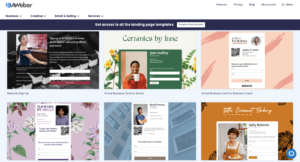
AWeber gives you landing pages on all paid plans — unlimited on Plus. The landing page builder supports ecommerce payment collection directly through the page. You can sell digital products, accept donations, or take orders without connecting a separate payment tool. Transaction fees apply: 1% on Lite, 0.6% on Plus.
The free plan caps you at three email sends per month worth of landing page capacity. Paid plans remove those restrictions.
For bloggers and creators who want to sell digital products directly from a landing page connected to their email list — AWeber’s ecommerce capability is a genuine feature that Constant Contact does not offer in the same integrated way.
Constant Contact: Event pages as the standout feature

Constant Contact’s standard landing pages are functional but not impressive. Where it genuinely pulls ahead is the event management infrastructure.
You can build event registration pages, collect RSVPs, sell tickets, send automated event reminders, and manage attendee lists all inside Constant Contact. For a nonprofit, a church, a local business running regular events, or any organisation where managing attendance is part of the work — this is a specific, valuable capability that AWeber simply does not have.
If events matter to your operation, this single feature can justify Constant Contact over AWeber — and over cheaper alternatives that also do not have it.
Winner: AWeber for general landing page capability and ecommerce integration. Constant Contact specifically for event-driven organisations where the RSVP and ticket management tools are central to the business.
Deliverability
Both platforms have been around long enough to have mature sending infrastructure and established relationships with major inbox providers. But the numbers tell different stories.
AWeber: Strong deliverability, well-documented
AWeber’s deliverability is consistently rated as one of its strongest features. Multiple independent reviews cite excellent inbox placement rates. Automatic SPF, DKIM, and DMARC authentication is included and set up through a step-by-step guide inside the platform.
AWeber also offers AMP email support — a relatively modern feature that allows interactive content inside emails without the recipient needing to click through to a website. This is uncommon at this price point.
One specific advantage worth calling out: AWeber explicitly allows affiliate marketing content in emails, with appropriate consent and guideline adherence. Many email platforms restrict or outright ban affiliate links, which has pushed affiliate marketers toward platforms willing to accommodate them. AWeber is one of the few mainstream tools that does this openly, making it a strong choice for that specific use case.
Constant Contact: Solid but overstated
Constant Contact claims over 95 percent inbox placement on its website. Independent testing consistently puts the real rate between 82 and 92 percent — with some testing rounds showing results below 80 percent.
That gap between claimed and independently verified deliverability rates is significant. The platform has been around long enough that its sending infrastructure is mature. But the gap suggests that Constant Contact’s marketing around deliverability should be taken with some scepticism.
Both platforms support full email authentication. Neither offers dedicated IP addresses. Neither has a deliverability dashboard for monitoring your own inbox placement proactively.
Winner: AWeber — stronger independent deliverability scores and the ability to support affiliate marketing content without policy friction.
Integrations
Constant Contact: 300+ integrations, strong for mainstream tools
Constant Contact connects to over 300 apps natively. Square, Xero, Shopify, WordPress, social media platforms, website builders, and Canva are all there. For a small business using standard tools — Constant Contact covers most needs.
The honest limitation: anything beyond mainstream requires Zapier. Multiple reviewers specifically describe wishing the platform did not rely on Zapier so heavily for extended connectivity.
AWeber: 750+ integrations, strong for content creators and ecommerce
AWeber connects to over 750 apps — more than double Constant Contact’s native library. The integrations cover Shopify, WooCommerce, PayPal, WordPress, Canva, Zapier, and a wide range of tools that creators, affiliate marketers, and small ecommerce businesses use.
The integration depth is particularly good for content creators — RSS-to-email automation, content management system connections, and payment platforms are all well-represented.
Winner: AWeber — 750+ vs 300+ native integrations is a meaningful difference for businesses whose tools go beyond the most mainstream options.
Reporting and Analytics
AWeber: A/B testing on content, not just subject lines
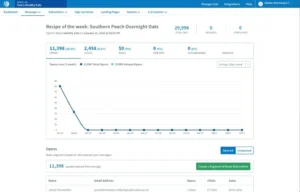
AWeber’s reporting covers the standard metrics — opens, clicks, bounces, unsubscribes. The click map shows where subscribers clicked inside the email. Revenue tracking for ecommerce is available on Plus.
The meaningful differentiator over Constant Contact: A/B testing on AWeber covers content variations, not just subject lines. You can test two entirely different email designs or copy approaches against each other and see which performs better. That is a real optimisation tool that Constant Contact does not match.
Constant Contact: Subject line A/B only, basic analytics
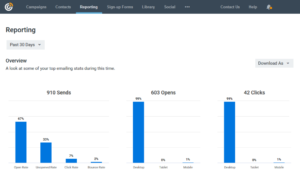
Constant Contact’s reporting covers opens, clicks, bounces, unsubscribes, and device data. Heat maps are available. The data is presented cleanly.
A/B testing is limited to subject lines. Testing email content, designs, or send times requires workarounds that are not built natively into the platform.
Revenue attribution that connects email sends to purchases requires integrating your ecommerce store — and even then, the reporting does not go as deep as dedicated ecommerce email tools.
Winner: AWeber — content A/B testing is the specific capability that pushes it ahead. Being able to test what you say — not just what the subject line is — is a meaningfully more powerful optimisation tool.
Customer Support
This is the category both platforms market heavily — and where the honest comparison is more nuanced than either platform’s marketing suggests.
AWeber: 24/7 phone support including nights and weekends
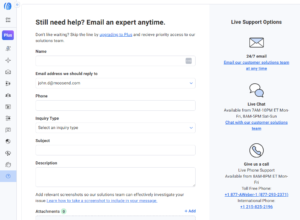
AWeber offers 24/7 phone, email, and live chat support on paid plans. This is one of the most generous support structures in the email marketing space. Most platforms offer phone support only on premium tiers or during business hours.
G2 rates AWeber’s support quality at 8.8 out of 10 — one of the highest support scores among all email marketing platforms. Multiple reviewers describe feeling genuinely supported rather than being pointed at documentation.
One specific standout: AWeber offers free migration service where the AWeber team moves your contact lists, templates, and existing campaigns from your previous provider. That takes the friction out of switching in a way that most platforms do not offer.
Constant Contact: Phone support during business hours, not 24/7

Constant Contact offers phone and live chat support on all paid plans — but not 24/7. Support hours are Monday through Thursday 6am to 8pm, Friday 6am to 7pm, and Saturday 8am to 6pm Mountain Time.
G2 rates Constant Contact’s support at 8.3 out of 10 — solid but noticeably lower than AWeber’s 8.8.
The support quality itself is generally described as warm and helpful. The specific problem is the cancellation process. Constant Contact does not allow self-service cancellation. You must call during business hours. Multiple BBB filings describe auto-renewals continuing after cancellation attempts and accounts reactivating without consent.
AWeber allows self-service cancellation through the dashboard. That is a small thing until you need it — and then it matters enormously.
Winner: AWeber — 24/7 phone support, higher G2 support rating, free migration service, and self-service cancellation. The cancellation difference alone is meaningful for anyone who has read about Constant Contact’s documented cancellation complaints.
Pricing: The Full Honest Picture
Both platforms have raised prices significantly in the past two years — and both have eliminated generous free or entry-level tiers in the process.
AWeber Pricing
AWeber has four tiers: Free, Lite, Plus, and Done For You.
The Free plan gives you up to 500 subscribers with unlimited landing pages, sign-up forms, basic automation, the AI subject line writer, and access to the full email template library. The limitations are AWeber branding on emails and landing pages, a cap of 3,000 email sends per month, no advanced features like content A/B testing, and one list and one segment only.
This is a genuinely useful free plan for a brand-new list under 500 subscribers. Not a demo — a real working product.
The Lite plan starts at $15 a month. It removes the send cap and includes more features. Still limited to one list, one segment, three automations, and three landing pages. For anyone who needs more, Lite hits ceilings fast.
The Plus plan is where AWeber becomes genuinely useful. It adds unlimited automations, unlimited landing pages, unlimited segments, content A/B testing, advanced analytics, and removes AWeber branding. This is the plan most serious users should be on.
The Done For You plan is a managed service where AWeber sets up your email marketing for you. Pricing starts at $79 plus $20 a month — worth considering for businesses that want professional setup without hiring a consultant.
In December 2024, AWeber raised prices by 50 to 150 percent and eliminated all grandfathered pricing. Long-term customers who had locked in older rates lost those rates with no warning. This generated significant negative reviews and directly hurt the platform’s reputation among its most loyal users.
AWeber Plus plan pricing by contact count:
| Contacts | Monthly (annual) |
|---|---|
| 500 | $20/month |
| 2,500 | $45/month |
| 5,000 | $65/month |
| 10,000 | $90/month |
| 25,000 | $155/month |
| 50,000 | $255/month |
Transaction fees apply on ecommerce sales: 1% on Lite, 0.6% on Plus.
Constant Contact Pricing
Constant Contact eliminated its free plan in June 2025. There is no permanent free option — only a 30-day trial.
The Lite plan starts at $12 a month for up to 500 contacts. Basic email marketing, one automation template, and one custom segment. Functional as a starting point but limited for real growth.
The Standard plan starts at $35 a month for up to 500 contacts. This is where Constant Contact becomes genuinely useful — A/B testing on subject lines, ten segments, three automation templates, and better reporting.
The Premium plan starts at $80 a month for up to 500 contacts. Unlimited automation templates, advanced reporting, and Google Ads integration.
Constant Contact Standard plan pricing by contact count:
| Contacts | Monthly |
|---|---|
| 500 | $35/month |
| 1,000 | $55/month |
| 2,500 | $70/month |
| 5,000 | $80/month |
| 10,000 | $110/month |
| 25,000 | $175/month |
| 50,000 | $295/month |
Side-by-Side at Common List Sizes:
| Contacts | AWeber Plus | Constant Contact Standard |
|---|---|---|
| 500 | $20/month | $35/month |
| 2,500 | $45/month | $70/month |
| 5,000 | $65/month | $80/month |
| 10,000 | $90/month | $110/month |
| 25,000 | $155/month | $175/month |
At every list size, AWeber Plus costs less than Constant Contact Standard — and delivers more features including content A/B testing, better automation, and a larger template library.
The only scenario where Constant Contact’s pricing looks more attractive: if you stay on Lite at $12 a month. But Lite on Constant Contact is so restricted — one automation, one segment, no A/B testing — that comparing it to AWeber Plus is not really an apples-to-apples comparison.
What Real Users Are Actually Saying
On AWeber’s December 2024 price increase:
This shows up in enough reviews to call it a pattern, not isolated complaints. Multiple long-term AWeber users describe increases of 50 to 150 percent on their existing plans with no grandfathering of previous rates. One reviewer described being loyal for years and feeling that loyalty was not reciprocated when the prices changed overnight. The negative sentiment from this specific event is the loudest consistent complaint in AWeber’s 2025 and 2026 reviews.
On AWeber’s support quality:
The most consistent positive in AWeber reviews is the support team. Multiple users across G2, Capterra, and Software Advice describe conversations with support staff who genuinely solved problems and followed up afterward. The 24/7 phone support is specifically called out as a differentiator — multiple reviewers describe being able to call on a weekend and get real help. That consistency across platforms is meaningful signal.
On Constant Contact’s cancellation experience:
This pattern is well-documented in BBB filings and Trustpilot reviews. The requirement to call during business hours to cancel is the most cited frustration. Multiple users describe cancelling and continuing to be charged. One BBB filing described attempting to cancel for three months without success. The platform’s Trustpilot score dropped measurably in the months following its June 2025 pricing restructure.
On both platforms feeling dated:
This shows up across both sets of reviews. Users who came from newer platforms describe both AWeber and Constant Contact as feeling like tools from a previous era. The interfaces, the automation logic, and the overall product direction all draw this comparison. It is not a complaint about bugs or reliability — it is a complaint about being outpaced by competitors who started building later and moved faster.
My Honest Take After Testing Both
Here is where I land.
AWeber is the better tool between these two for most people reading this. The template library is larger. The A/B testing covers content, not just subject lines. The deliverability scores better in independent testing. It costs less at every comparable list size. The support is available 24/7 including weekends. And you can cancel from the dashboard without calling anyone.
The December 2024 price increase was a real betrayal of long-term users and it deserves to be stated directly. The automation is still basic. The interface still feels dated. These are real shortcomings.
But Constant Contact has the same shortcomings — and adds a cancellation process that has generated documented consumer complaints, pricing that is higher at every tier, and an even shallower automation system.
Constant Contact still earns a specific recommendation for one type of organisation. If you run regular events — RSVPs, ticket sales, attendee management — and you want all of that in the same platform as your email marketing, Constant Contact’s event tools fill a gap that AWeber simply does not address. For nonprofits, churches, community organisations, and event-driven businesses, that specific feature is genuinely useful and hard to replace cheaply.
For everyone else: AWeber is the better choice between these two. And if you are not locked into either, read the section below before you decide.
Before You Commit to Either Platform
I want to be honest about something this comparison cannot fully address: both of these platforms are playing catch-up.
Neither is leading the market on automation. Neither is leading on pricing models. Neither has built the kind of modern feature set that platforms like MailerLite, Brevo, or ActiveCampaign offer at comparable or lower price points.
If you are new to email marketing and choosing between AWeber and Constant Contact for the first time — I would encourage you to also look at MailerLite before you decide. MailerLite starts at $10 a month with better automation, unlimited landing pages, a website builder, digital product selling, and a free plan for up to 1,000 subscribers. At 10,000 contacts it costs $65 a month versus AWeber’s $90 and Constant Contact’s $110. The automation has conditional branching that neither AWeber nor Constant Contact can match without significant plan upgrades.
That is not a forced recommendation — it is the honest comparison that someone who has tested all three would give you.
If you are already on AWeber or Constant Contact and looking for reasons to switch or to stay — the switching friction is real and worth weighing against the pricing and feature gap. But if you are starting fresh in 2026, run the numbers across all three before committing.
Frequently Asked Questions
Is AWeber better than Constant Contact?
For most small businesses — yes. AWeber has a free plan, better A/B testing, a larger template library, stronger independent deliverability scores, 24/7 phone support, and lower pricing at comparable list sizes. Constant Contact wins specifically for event-driven organisations that need RSVP management, ticket sales, and attendee tracking built into their email platform.
Does AWeber have a free plan?
Yes. AWeber’s free plan supports up to 500 subscribers with unlimited landing pages, sign-up forms, basic automation, and the AI subject line writer. Monthly email sends are capped at 3,000. AWeber branding appears on emails and pages. There is no time limit on the free plan.
Does Constant Contact have a free plan?
No. Constant Contact eliminated its free plan in June 2025. There is a 30-day free trial. After that, the Lite plan starts at $12 a month.
Can I cancel AWeber without calling?
Yes. AWeber allows self-service cancellation from the account dashboard. Constant Contact requires a phone call during specific business hours to cancel — a process that has generated documented consumer complaints including continued charges after cancellation attempts.
Did AWeber raise its prices?
Yes — significantly. In December 2024, AWeber raised prices by 50 to 150 percent and eliminated all grandfathered pricing for long-term customers. If you signed up before December 2024 expecting your rate to hold, it did not. This is the most consistent complaint in AWeber’s recent reviews.
Which has better email deliverability?
AWeber scores better in independent testing and explicitly allows affiliate marketing content in emails — something many platforms restrict. Constant Contact claims over 95 percent inbox placement, but independent testing consistently puts the real rate between 82 and 92 percent. AWeber’s independently verified rates are higher.
What is the best alternative to both?
For general email marketing: MailerLite at $10 a month gives you more features at a lower price than either platform. For multi-channel marketing including SMS and WhatsApp: Brevo has a pricing model based on emails sent rather than contacts stored, which is significantly cheaper for large lists. For serious automation: ActiveCampaign is in a different category but worth comparing if your marketing has outgrown basic drip sequences.
