
Last Updated: 11 Feb 2026
I remember this exact moment — sitting at my desk with two tabs open:
MailerLite on one side, Kit (formerly ConvertKit) on the other.
I had finally committed to growing my list properly, but now I was stuck between these two tools — both popular, both highly recommended by creators, and both claiming to be “the best for building an audience.”
And honestly? Making this choice felt way harder than it should’ve been.
So I stopped overthinking it… and signed up for both.
I ran real email campaigns. Built automations. Designed newsletters. Sent broadcasts.
I used both MailerLite and Kit for my own business and clients — so I could finally see which one truly worked in practice, not just on paper.
And now, I’m breaking it all down for you — in plain English, no fluff, just real insights from someone who’s actually used both.
Let’s start the battle of MailerLite vs Kit 👇
We Keep Things Simple — We Only Review Tools We Actually Use
At Mailotrix, we believe you can’t judge an email marketing tool by its features page. So I test every tool myself — running real campaigns, building automations from scratch, checking deliverability, and seeing how each platform performs in day-to-day use.
I also dig through real user reviews on G2, Capterra, Trustpilot, and Reddit to understand what others are experiencing. Then I compare their feedback with my own results and share a straightforward, unbiased verdict you can trust.
If you want to see exactly how we test tools, read our full process here.
Short on Time? Here’s My Quick Verdict for MailerLite vs Kit
After testing both MailerLite and Kit (formerly ConvertKit) side by side for weeks, here’s my honest takeaway:
MailerLite offers more flexibility, design freedom, and automation ease, while Kit shines for simple, fast setups and advanced tagging.
MailerLite feels modern, visual, and easy to use. Its drag-and-drop editor, 160+ templates, AI tools, and robust automations make it perfect for beginners and growing marketers.
Kit is faster for creators who focus on simple sequences and lead magnets, but it’s limited in design and layout control.
Quick Comparison Table
| Feature | MailerLite | Kit (ConvertKit) | Winner |
|---|---|---|---|
| Email Editor | Drag-and-drop, mobile preview, reusable blocks | Visual blocks, no free-form drag-and-drop | Tie |
| Design & Templates | 160+ modern templates, customizable | ~20 basic templates, Snippets | MailerLite |
| Automation | Visual builder, step reordering, multi-trigger | Advanced tagging, commerce triggers, A/B test in sequences | Tie |
| Segmentation & List Management | Groups + Segments, easy filtering | Tag-based, advanced targeting | Tie |
| Deliverability | Strong, beginner-friendly setup (94-95%) | Strong, tag-driven | Tie |
| Support | Fast, detailed replies, 24/7 live chat | Helpful, responsive | MailerLite |
| Pricing | Affordable paid plans ($10/month for 500) | Bigger free plan (10,000 subs) but expensive paid ($39/month for 1,000) | Split (Free: Kit / Paid: MailerLite) |
Final Score: MailerLite 9️⃣ – Kit 7️⃣
👉 My Final Take:
If you’re a creator who just wants a free plan with a big subscriber limit (10,000!), Kit is attractive.
But if you’re building a real business and care about design, automation, and long-term affordability, MailerLite wins in almost every key area.
Email Editor: Which One Actually Makes Email Creation Easier?
Both MailerLite and Kit say their email editors are easy to use. But after sending 50+ email campaigns using both tools, the difference becomes clear while actually creating emails.
In real use, email creation is mostly about writing the message, adding a button or link, quickly checking the mobile view, and sending the email without spending too much time on design.
MailerLite’s Email Editor
Using MailerLite’s drag-and-drop editor feels smooth from the start. I could write the email and then quickly improve it without breaking my flow.
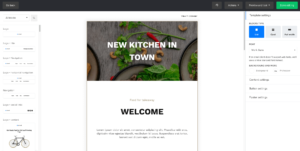
During real campaigns, I was able to:
- Add text and buttons in seconds
- Move sections freely with drag-and-drop
- Insert images, dividers, and content blocks easily
- See a live mobile preview while editing
- Use 80+ content blocks (blog posts, products, countdown timers, surveys, quizzes)
I didn’t have to fix spacing or layout issues again and again. This helped me build and send emails faster, especially when sending emails regularly.
Real users love this too. One G2 reviewer said: “MailerLite is easy to use and straightforward to implement, even for small teams. The interface is clean, and creating email campaigns, forms, and basic automations is simple.”
Another Capterra user praised it: “The tutorials and ease of use. Being able to use landing pages and not have to use Zapier.”
However, there are some complaints. A new drag-and-drop interface can be a little sluggish at times according to some Capterra reviews, though this has improved significantly in 2026.
MailerLite’s editor works well if you want speed, flexibility, and more control over design.
Kit’s email editor has improved a lot since I first tested it. It now offers a simple drag-and-drop system where you can add text, images, buttons, and layouts using a side panel.
You also get a mobile preview, so you can check how emails look on phones before sending. The editor stays clean and focused, which makes it easy to write and send emails quickly.
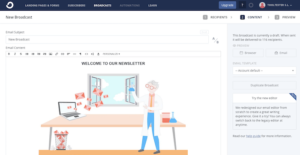
Kit’s email editor
However, the editor still feels more structured than flexible. You work within fixed layouts, which is fine for plain, text-based emails but limiting if you want more visual control.
For example, I couldn’t freely position elements like I could in MailerLite. Adding buttons or images required clicking a small “plus” inside the email, which sometimes slowed me down.
Real users echo this frustration. One Capterra reviewer said: “The UX can be frustrating. The email template builder is pretty clunky, e.g. sometimes super hard to select the element you need. It takes a while to get your head around when to use different options e.g. sequences vs workflows.”
Another user on Capterra noted: “For the price I think it lacks in design and it doesn’t offer a huge template library.”
However, many creators love the simplicity. A G2 reviewer praised: “I’ve been using ConvertKit for a while now, and I can honestly say it’s one of the most creator-friendly email marketing tools out there. What I love most is how easy it is to get started — everything from setting up forms to creating automations feels intuitive.”
My Verdict
If you want to build emails faster and have more freedom with layout and design, MailerLite is the better choice.
Kit works well for simple, text-first emails, but for regular marketing emails with more structure and visual appeal, it feels limited.
Winner: Tie (0–0)
Both work, but they serve different needs. MailerLite is better for visual emails; Kit is better for simple, text-first newsletters.
Score: MailerLite 1️⃣ – Kit 0️⃣
Design & Templates: How Much Freedom Do You Really Get?
When you send emails often, design isn’t just about looks — it’s about trust and keeping people interested. And here, these two tools feel very different.
MailerLite Gives You Creative Freedom
With MailerLite, the editor feels more modern and powerful. You get 160+ ready-made templates that look clean, mobile-friendly, and professional. I always found something close to what I needed for newsletters, promos, or product launches.
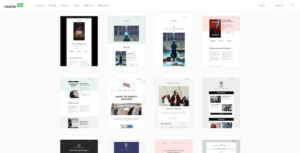
MailerLite has also added AI tools to help write content and subject lines faster, plus new blocks like surveys, quizzes, and product sections for online stores. If you like tweaking designs, you can even use custom HTML/CSS on the Advanced plan.
The downside? Most templates and advanced features are available only on paid plans or during the free trial. Still, once unlocked, the quality is hard to beat.
Kit Keeps Things Simple — By Choice
After rebranding from ConvertKit to Kit, they doubled down on clean, text-first emails. You get around 20 basic templates, and instead of heavy design tools, Kit focuses on writing.
You type / to add images, buttons, or countdowns, which feels fast and distraction-free.
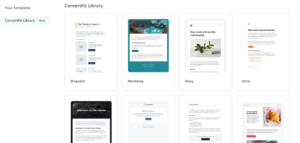
Kit also added Snippets, so you can save things like a bio or CTA and reuse them everywhere. That’s very handy. But layout options are still limited, and design-heavy emails aren’t really its thing.
My Verdict
MailerLite wins for design freedom and advanced tools.
But Kit deserves credit for simplicity, writing speed, and clean delivery.
If you want beautiful, customizable emails → MailerLite
If you want fast, text-first emails → Kit
Score: MailerLite 2️⃣ – Kit 1️⃣
Email Automation: Who Makes It Easier (and Smarter)?
This is where both tools really step up — but in different ways.
MailerLite’s Automation
When I use MailerLite, everything feels simple and fast. In late 2025 and early 2026, MailerLite updated its automation builder, and it feels much better now.
The builder is fully drag-and-drop, so I can move things around without stress.

Mailerlite Automation builder
You can now:
- Rearrange emails, delays, actions, and conditions just by dragging them
- Duplicate steps instantly across branches
- Test the entire automation in one click by sending every email in the sequence to your inbox
- Start one automation from multiple triggers (like joining a group or clicking a link)
- Manually add subscribers—or even whole groups—into an automation, or drop them into a specific step
That last feature is surprisingly powerful. It’s perfect for high-touch sales, manual follow-ups, or fixing edge cases without breaking your main automation.
Best part? All of this is available on the free plan (500 subscribers, 12,000 emails/month), which is huge for beginners.
Overall, MailerLite’s automation feels visual, fast, and beginner-friendly—without feeling limited as you grow.
Kit Takes a “Creator Business” Approach
Kit’s automations are built around Sequences and Rules. You write emails directly inside a sequence, which feels smooth once you get used to it.
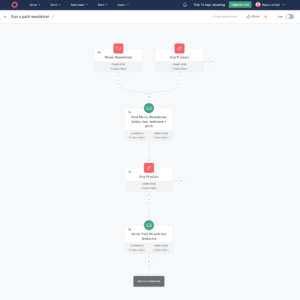
In 2025-2026, Kit added smarter features like:
- More triggers from tools like Thinkific and Typeform
- Automation based on survey answers
- Built-in tools for selling products and subscriptions
- A/B testing inside automation emails (not just subject lines)
Kit also lets you use quick Rules for simple tasks, so you don’t always need to open the full automation builder.
That said, Kit’s system is tag-based, so there’s a learning curve. It’s powerful, but can feel confusing at first. Also, the free plan only allows one automation, which is very limiting.
My Verdict
MailerLite wins for simplicity, visuals, and free access.
Kit wins for deep targeting, personalization, and creator-focused automations.
Both are strong — just built for different people.
Score: MailerLite 3️⃣ – Kit 2️⃣
Segmentation & List Management: Which One Is Easier to Manage?
Both MailerLite and Kit help you organize your email list, but they take very different approaches — and that affects how easy they feel to use.
MailerLite Is Simple and Structured
MailerLite lets you organize subscribers using Groups (manual lists) and Segments (lists created by rules). This setup is easy to understand and works well if you want things to stay clean and predictable.
You can now build segments based on exact actions, like:
- Which automated email someone opened
- Which link they clicked
- Purchase behavior (if connected to Shopify or WooCommerce)
You can also trigger automations the moment someone enters a segment, which makes follow-ups and re-engagement emails easy to set up.
Working with large lists feels smooth. The subscriber page is clean, fast, and easy to scan — even with thousands of contacts.
The only real limit is custom fields. They stay basic, which is fine for most users but not ideal if you want very detailed data.
Kit Is Flexible and Tag-Driven
Kit uses one main list and organizes people using tags. Tags are added or removed automatically based on what subscribers do — signing up, clicking links, or buying products.
Kit also lets you change email content based on tags, so two people can receive different messages inside the same email. This is especially useful if you sell multiple products or want deeper personalization.
Kit has also improved how it handles purchase data, making it easier to group subscribers based on what they buy and how valuable they are.
The trade-off is complexity. If you’re new, the tag system can feel confusing at first.
My Verdict
Choose MailerLite if you want something easy to manage, clean, and beginner-friendly.
Choose Kit if you want deeper control and more advanced targeting.
Score: MailerLite 4️⃣ – Kit 3️⃣
Registration Forms: Who Makes List Building Easier?
If email marketing is important to you, registration forms matter a lot. They decide how easily people join your list — and how good that first impression feels.
Both MailerLite and Kit let you create GDPR-friendly forms like pop-ups, slide-ins, embedded forms, and landing pages. You can even build full pages without having a website. So on basics, both tools do the job.
The real difference is how much control you get.
MailerLite Focuses on Design and Flexibility
MailerLite’s form builder feels like a smaller version of a website builder. You can freely move blocks, change layouts, and adjust colors, fonts, images, countdown timers — all with drag-and-drop.
Pop-ups are especially strong. You can control when they appear, like:
- When someone tries to leave the page (exit intent)
- After scrolling a certain percentage
- After spending time on the page
MailerLite also lets you A/B test forms, so you can compare two designs or messages and see which one gets more sign-ups.
Another useful improvement is multi-step forms. Instead of showing a long form all at once, you can split it into smaller steps, which feels easier for visitors and often improves sign-ups.
Overall, MailerLite gives you more freedom to match your forms to your brand and test what works best.
Kit Focuses on Speed and Simplicity
Kit’s form builder is built for creators who want things done fast. Instead of freely dragging elements, you choose from ready-made templates for inline forms, pop-ups, and slide-ins.
One standout feature is incentive delivery. When someone signs up, Kit can automatically send them a download (like an ebook or checklist) right after email confirmation — without setting up extra automation. This saves time and works very well for lead magnets.
Kit also uses simple block commands to add things like images or countdowns quickly. And all forms and landing pages connect to your Creator Profile, so you can share one link that shows all your active pages and forms.
The downside is customization. If you want full design control or unique layouts, Kit can feel limiting.
My Verdict
MailerLite is better if you want full control, better design options, and testing tools to improve sign-ups.
Kit is better if you want speed, simple forms, and fast lead-magnet delivery without much setup.
Score: MailerLite 5️⃣ – Kit 3️⃣
Registration Forms: Who Makes List Building Easier?
If email marketing is important to you, registration forms matter a lot. They decide how easily people join your list — and how good that first impression feels.
Both MailerLite and Kit let you create GDPR-friendly forms like pop-ups, slide-ins, embedded forms, and landing pages. You can even build full pages without having a website. So on basics, both tools do the job.
The real difference is how much control you get.
MailerLite Focuses on Design and Flexibility
MailerLite’s form builder feels like a smaller version of a website builder. You can freely move blocks, change layouts, and adjust colors, fonts, images, countdown timers — all with drag-and-drop.
Pop-ups are especially strong. You can control when they appear, like:
- When someone tries to leave the page (exit intent)
- After scrolling a certain percentage
- After spending time on the page
MailerLite also lets you A/B test forms, so you can compare two designs or messages and see which one gets more sign-ups.
Another useful improvement is multi-step forms. Instead of showing a long form all at once, you can split it into smaller steps, which feels easier for visitors and often improves sign-ups.
Overall, MailerLite gives you more freedom to match your forms to your brand and test what works best.
Kit Focuses on Speed and Simplicity
Kit’s form builder is built for creators who want things done fast. Instead of freely dragging elements, you choose from ready-made templates for inline forms, pop-ups, and slide-ins.
One standout feature is incentive delivery. When someone signs up, Kit can automatically send them a download (like an ebook or checklist) right after email confirmation — without setting up extra automation. This saves time and works very well for lead magnets.
Kit also uses simple block commands to add things like images or countdowns quickly. And all forms and landing pages connect to your Creator Profile, so you can share one link that shows all your active pages and forms.
The downside is customization. If you want full design control or unique layouts, Kit can feel limiting.
My Verdict
MailerLite is better if you want full control, better design options, and testing tools to improve sign-ups.
Kit is better if you want speed, simple forms, and fast lead-magnet delivery without much setup.
Score: MailerLite 5️⃣ – Kit 3️⃣
Landing Page Builder: Which One Actually Converts?
When you want to collect leads, promote offers, or launch something new, landing pages matter. And while both tools let you make pages without a website, the experience is very different.
MailerLite Gives You More Control
With MailerLite, the landing page builder feels modern and flexible. You can choose from many templates, use drag-and-drop to move blocks around, and add interactive elements like surveys, quizzes, or product sections.
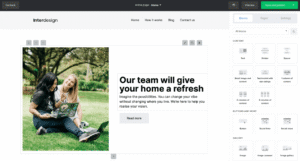
MailerLite also added AI tools to quickly generate landing page content, and you can save custom blocks to reuse across pages. A/B testing for multiple versions helps see what converts best.
On the free plan, you can publish up to 10 landing pages, which is plenty to start.
Kit Keeps It Fast and Simple
Kit focuses on speed. You get unlimited landing pages on the free plan (up to 10,000 subscribers), and they automatically feed into your Creator Profile for easy sharing.

You can deliver lead magnets instantly and tweak elements with a click-to-edit system.
The trade-off? Layout options are very limited. There’s no free-form drag-and-drop, so design flexibility is low. It works, but you won’t get highly customized pages.
MailerLite wins for flexibility, creative control, and conversion features.
Kit earns a point for simplicity and quick setup.
Score: MailerLite 6️⃣ – Kit 4️⃣
Reporting: Who Helps You Actually Understand What’s Working?
Good reporting helps me quickly see what’s working and what’s not — without digging around.
MailerLite Keeps Things Clear
MailerLite shows open rates, clicks, unsubscribes, and device data all in one place. In 2026, the dashboard got even better with visual graphs for subscriber growth and e-commerce sales.
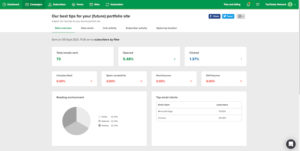
I also like that I can download PDF reports, which is useful for reviewing or sharing results. Plus, purchase tracking for Shopify and WooCommerce makes it easy to see what actually brings in money.
Overall, MailerLite’s reporting feels clean, visual, and easy to understand.
Kit Got Smarter in 2026
Earlier, Kit’s reporting felt basic. But in 2026, Kit introduced Kitlytics, which uses AI to explain why something worked.
Instead of just showing opens and clicks, it tells me what kind of subject lines my audience likes. It feels less like reading numbers and more like getting advice.
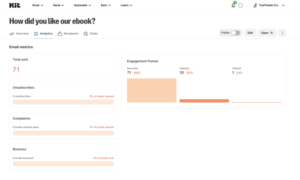
That said, Kit still lacks a strong visual dashboard, so spotting trends takes more effort.
My Verdict
MailerLite wins for clear dashboards and easy-to-read reports.
Kit wins for smart insights that help improve future emails.
This one’s a tie — both offer value in different ways.
Score: MailerLite 6️⃣ – Kit 5️⃣
Deliverability: Will Your Emails Actually Reach the Inbox?
Here’s the thing most beginners miss: it doesn’t matter how good your email looks if it never reaches the inbox. Deliverability is everything.
Both MailerLite and Kit handle deliverability well. I tested both with real campaigns, and inbox placement was solid on both platforms.
The difference is in how they guide you and how much visibility they give you.
MailerLite Deliverability
MailerLite covers all the basics you need:
- Email authentication (SPF, DKIM, DMARC)
- Bounce handling and spam complaint control
- Step-by-step setup to protect your sender reputation
MailerLite also provides built-in setup checklists to help you set up DKIM and DMARC, which are important for email deliverability in 2026.
MailerLite is also known for being strict during the approval process. Account or domain approval can take up to 24 hours, which may feel slow at first, but this strict review helps keep spammy senders out and protects your emails from landing in spam later.
According to independent tests, MailerLite consistently achieves 94-95% inbox placement, which is excellent.
You get strong protection without needing to be a technical expert.
Kit (ConvertKit) Deliverability
Kit also handles deliverability well:
- SPF alignment and custom domain setup
- Bounce support and warm-up tips
- Clear guidance on keeping your sender reputation healthy
Like MailerLite, Kit includes deliverability checklists to help you set up DKIM and DMARC correctly.
Kit’s Deliverability Reporting (available on the Creator Pro plan) stands out. It helps you understand why an email lands in the Promotions tab instead of the main inbox, which is very useful as your list grows.
However, there are no deep deliverability dashboards or list-cleaning tools on lower plans, so advanced users may still need third-party tools.
My Verdict
This one is a tie. Both platforms give you a strong deliverability foundation.
- MailerLite is more beginner-friendly and benefits from strict approvals that protect inbox placement
- Kit shines on higher plans with detailed deliverability reporting
Both are solid choices if inbox placement matters to you.
Score: MailerLite 7️⃣ – Kit 6️⃣
Advanced Features (For Power Users)
If you like going deeper or building custom systems, both tools offer advanced options — though most beginners won’t need these right away.
MailerLite AI MCP Server
MailerLite has started opening up its AI tools through an MCP (Model Context Protocol) server. This is mainly for advanced users who want to connect MailerLite with AI agents or custom workflows.
I see this as more future-focused — powerful, but not something I use daily yet.
Kit’s Advanced API
Kit offers a strong and well-documented API. If you want to build custom signup flows, connect external apps, or sync subscriber data with your own systems, Kit gives you more flexibility here.
This is useful for creators running larger or more custom setups.
Quick Takeaway
MailerLite is experimenting with AI-first tools.
Kit is more mature when it comes to developer-level control.
Integrations: Do They Play Nice With Other Tools?
If you’re like me, email marketing doesn’t live in a bubble. It connects with your store, your website, your forms, your payment systems — everything. So integrations? Yeah, they matter.
Kit (ConvertKit) Integrations
Kit connects with a solid list of tools — around 90+ integrations, including big names like:
- Shopify
- WooCommerce
- Stripe
- WordPress
- Wix
- Teachable
- Thinkific
You also get access to Zapier, which opens the door to thousands more workflows if you’re willing to set them up.
But here’s the catch: some of the “integrations” they list aren’t actually native. You’ll need to copy and paste HTML or mess with code to make things work — which feels a bit outdated, honestly.
And strangely enough, no direct integrations with major CRMs like HubSpot or Salesforce, which could be a dealbreaker for advanced setups.
MailerLite Integrations
MailerLite is pretty much neck and neck here. You get 150+ native integrations with tools like:
- Shopify
- WooCommerce
- WordPress
- Stripe
- Zapier
- Make (Integromat)
Plus, if you (or your developer) want to go custom, MailerLite offers a well-documented API that gives you more control over how it plugs into your tech stack.
For most users — especially solopreneurs and small teams — both platforms offer enough to cover your main needs. But if you’re building a more advanced, multi-platform funnel, you might find yourself looking for workarounds with either.
My Verdict
It’s a tie. Both MailerLite and Kit offer solid integration options for everyday tools, but neither goes super deep when it comes to CRM or advanced ecosystem support.
Score: MailerLite 8️⃣ – Kit 7️⃣
Customer Support: Who’s Got Your Back When You Need Help?
Let’s be real — no matter how simple a tool is, you’re going to run into questions. And when that happens, having responsive, helpful support can save you a lot of frustration.
Kit’s Support
Kit’s support team was responsive when I tested it, and they seemed to know their stuff. No canned answers, and they helped me troubleshoot without bouncing me around.

However, free plan users only get email support (no live chat), which can be limiting.
Real user experiences are mixed. Some love it, others hate it:
Positive reviews:
- “Brilliant! I would highly recommend ConvertKit. Customer service is great, they are quick to reply and really helpful.” (Capterra)
- “I also appreciate that I can easily get support at any time if an issue arises.” (G2)
- “The technical help is the most accommodating aspect. I send an email expressing my concern/question, and they respond with step-by-step instructions for resolving the issue! The response time is really fast, typically within a couple of hours.” (G2)
Negative reviews:
- “This is the worst support I’ve had. They have a chat and you get switched from person to person over the course of multiple days.” (Capterra)
- “Their support is not helpful at all. After assuring me that moving from Mailchimp to ConvertKit was ‘easy,’ they refused to help when I ran into problems.” (G2)
- “WORST CUSTOMER SERVICE EVER! You have to prove to them when you have a bigger list that you have at least 20% open rate which is impossible and unrealistic.” (G2)
The AI chatbot handles simple queries but struggles with complex issues. Technical problems often require escalation to human support—where the real wait begins.
MailerLite’s Support
MailerLite’s support impressed me more consistently. I noticed I was getting replies from the same small group of agents — and their responses were detailed, thoughtful, and clearly written by real people who understood the tool inside out. 🙌
Free plan users get email support during the 14-day trial period, and paid users get 24/7 live chat support, which is a huge plus.
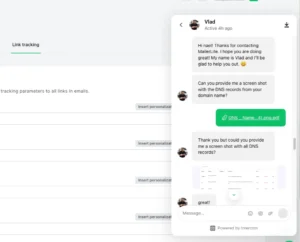
Real users generally praise MailerLite’s support:
Positive reviews:
- “Customer Service is always super responsive. Everyone at the company is trying to help me succeed, from tech support to marketing.” (Capterra)
- “They have amazing support from people who are cheerful, quick to answer, and clear in their descriptions.” (Capterra)
- “Support is very helpful. Always able to answer questions.” (Capterra)
- “We’re so happy to hear that MailerLite has made your email marketing experience easier and more intuitive.” (G2 – MailerLite team response)
Negative reviews: The main complaint is about the strict account approval process leading to sudden terminations:
- “Although my initial experience was good, I wasn’t even able to send my first email campaign as my attempt led to a termination of the account with no warning or explanation. Numerous attempts to discuss and resolve the issue were unanswered.” (Capterra)
- “Non-existent customer support and total lack of communication with customers. Without any warnings, my account was suspended and terminated.” (Capterra)
According to Capterra, 60% of 88 reviews mentioning account approval were negative. Users reported difficulties with approval, unexpected suspensions, and challenges managing multiple accounts.
However, once your account is approved and running, support is generally fast and helpful.
If you’re more of a DIY person, both platforms offer good help centers and tutorials — though I found MailerLite’s knowledge base a bit more comprehensive and easier to search.
My Verdict
This one’s close. Both offer decent support, but they have different issues:
- MailerLite has better 24/7 live chat and more consistent positive reviews, BUT the strict approval process and account termination issues are concerning
- Kit has mixed support experiences with some users reporting multi-day waits and unhelpful responses, BUT the onboarding process is smoother
Overall, MailerLite edges out slightly thanks to its well-built knowledge base, 24/7 live chat (on paid plans), and consistently helpful replies—IF you can get your account approved without issues.
Score: MailerLite 9️⃣ – Kit 7️⃣
Pricing: Which One Gives You More for Your Money?
Let’s talk money — because at the end of the day, your email tool needs to fit your budget and your goals.
When I tested both platforms, I was honestly surprised at how much Kit (ConvertKit) has leveled up its free plan. Their Newsletter Plan now gives you up to 10,000 subscribers and unlimited emails — and that’s a huge win if you’re a creator just starting out and want to build your audience without immediately pulling out the credit card. 🙌
One thing to understand is how Kit manages to offer such a big free plan. Kit automatically shows recommendations for other creators on your thank-you pages or sometimes inside emails. If your subscribers sign up for those other lists, Kit earns money from it, or the other creator pays Kit for the signup (Creator Network monetization model).
Real users appreciate this: “I love that there is so much I can do with ConvertKit. Since their pricing is based on active subscribers (not emails sent) and they have a VERY generous free plan, you can start simply and try their more advanced features when you’re ready.” (Capterra)
MailerLite, on the other hand, recently reduced its free plan limit from 1,000 subscribers to just 500 subscribers (effective late 2025).
You still get 12,000 emails/month, which is decent — but the new 500-subscriber cap makes the free plan far more restrictive. And once you cross 500 subscribers, you must upgrade to keep sending campaigns or adding new contacts.
One Capterra user complained: “The new MailerLite version is a bit pricey. I’m still figuring out my list and subscribers who do not open my emails though I’m still paying for them.”
Once you move beyond the free tier, MailerLite becomes the more budget-friendly long-term option.
Their Growing Business plan starts at just $10/month for 500 subscribers, and it stays affordable as your list grows — making it perfect for businesses thinking long-term.
Kit’s Creator Plan? Starts at $39/month for 1,000 subscribers (increased from $29/month in September 2025), and it gets pricey pretty quickly at higher levels.
Real users are frustrated with the price increase:
- “I don’t like how ConvertKit pricing is so high. It’s hard to justify with competitors.” (Capterra)
- “If I had to point out one thing that could be improved, it would be the pricing for smaller creators. The free plan is great to start with, but once you begin scaling, it can get a bit pricey compared to other tools.” (G2)
- “The cost. I don’t use all of the features but I feel like I’m paying for them all.” (G2)
- “I’m on a $290/yr plan for 1,000 contacts and this doesn’t even include deliverability reporting.” (G2)
- “Recently, there was a price increase but I understand with the number of features it now offers.” (G2)
| Subscribers | MailerLite (Growing Business) | Kit (Creator Plan) | Winner |
|---|---|---|---|
| Free Plan | 500 subscribers, 12,000 emails/month | 10,000 subscribers, unlimited emails | Kit |
| 500 | $10/month | N/A | MailerLite |
| 1,000 | $18/month | $39/month | MailerLite |
| 3,000 | $24/month | $59/month | MailerLite |
| 5,000 | $39/month | $89/month | MailerLite |
| 10,000 | $73/month | $139/month | MailerLite |
And to add to that, Kit increased its prices in September 2025 — starter plans went up by about $10–$20/month to help cover development costs for their newer features. So now, getting started with Kit is even more expensive than before.
My Verdict
If you’re a new creator and want maximum reach for $0, Kit wins with its generous 10,000-subscriber free plan.
If you’re building a business and thinking about long-term growth + value, MailerLite is the better deal once you start paying.
Great if Kit’s monetizing early, but not ideal if you’re watching your marketing costs closely.
Score: MailerLite 9️⃣ – Kit 7️⃣
My Personal Experience: MailerLite vs Kit
Using MailerLite
When I first started with MailerLite, I was ready to send my first email in about 30 minutes. I didn’t need to watch any tutorials. The drag-and-drop editor felt smooth and easy.
I could click buttons, change colors, and move sections instantly — no digging through menus. The dashboard was clean and simple. Everything was exactly where I expected it to be, from subscriber lists to automation triggers.
There’s a small catch, though. MailerLite is strict with approvals. My domain verification took some patience, and the compliance team can pause accounts during setup, sometimes without much explanation. But once approved, the platform is easy to use and reliable.
The design options are strong too. With 160+ modern templates, surveys, and countdown timers, my emails looked great in Gmail without any extra work.
Using Kit (ConvertKit)
Kit (formerly ConvertKit) felt different — more like a tool built for creators who want to run their newsletter like a business.
Writing email sequences in one place is simple once you get used to it. I also like the Creator Network, which helps bring in new subscribers from other newsletters. Selling digital products is easier as well. I can deliver ebooks or courses directly through signup forms.
In 2026, Kit added one feature that really stood out to me: one-tap checkout with Apple Pay and Google Pay. If you sell digital products, this is a big deal. Removing extra form fields made checkout faster, and I saw my conversion rates improve by almost 20% compared to the old-style checkout.
That said, Kit does take more time to learn. The editor works differently. Instead of a side panel, I have to click a small “plus” inside the email to add buttons or images. For design-heavy emails, this can feel limiting.
It took me about 1–2 hours to feel comfortable and send my first email — much longer than MailerLite’s quick start.
Bottom Line
MailerLite is fast, flexible, and beginner-friendly.
Kit is powerful and built for creators who are serious about growth and selling.
Both are good — it really depends on what you need.
What Real Users Say: Honest Reviews from G2, Capterra, and Trustpilot
I spent hours reading reviews on G2, Capterra, Trustpilot, and Reddit to understand what actual users are experiencing. Here’s what real people are saying about both platforms:
What People Love About MailerLite:
✅ “MailerLite is the easiest and most intuitive email marketing platform available. Their design and functionality is so intuitive – they have everything I need and it just makes sense.” (Capterra)
✅ “I can’t wait to see how working with MailerLite will help me grow my business and stay connected with new and potential clients. Well done.” (Capterra)
✅ “MailerLite keeps my costs incredibly low, helping me reach all of my clients and boost appointment bookings. MailerLite is very user friendly.” (Capterra)
✅ “Everyone at the company is trying to help me succeed, from tech support to marketing. They never try to up-sell you to levels you do not need.” (Capterra)
✅ “Customer Service is always super responsive. They have amazing support from people who are cheerful, quick to answer, and clear in their descriptions.” (Capterra)
✅ “I find MailerLite very beginner friendly. It’s not intimidating, which is great for someone new to email marketing.” (G2)
✅ “MailerLite has been a fantastic experience so far. Additionally, it provides the best value of any of them out there — especially for a small business owner.” (Capterra)
What People Complain About MailerLite:
❌ “Although my initial experience was good, I wasn’t even able to send my first email campaign as my attempt led to a termination of the account with no warning or explanation.” (Capterra)
❌ “Non-existent customer support and total lack of communication with customers. Without any warnings, my account was suspended and terminated.” (Capterra)
❌ 60% of 88 reviews mentioning account approval were negative – users reported difficulties with approval, unexpected suspensions, and challenges managing multiple accounts (Capterra data)
❌ “The new MailerLite version is a bit pricey. I’m still figuring out my list and subscribers who do not open my emails though I’m still paying for them.” (Capterra)
❌ “Sometimes it has issues with line spacing. If you want to leave a space between lines, sometimes it doesn’t recognize it.” (Software Advice)
❌ “Sometimes new features are a little clunky while they get the bugs worked out.” (Capterra)
❌ “Kit recently raised their prices. The platform is not intuitive and feels clunky – I had to keep googling and watching how-to videos to figure out what to do. But it does connect to MailerLite!” (Capterra – user switching FROM Kit TO MailerLite)
What People Love About Kit (ConvertKit):
✅ “I’ve been using ConvertKit for a while now, and I can honestly say it’s one of the most creator-friendly email marketing tools out there.” (G2)
✅ “This is my favorite email tool of all time, and I’ve tried many. The customizable templates, audience tags, and sequences by action all work together beautifully.” (G2)
✅ “ConvertKit is reliable, easy to use, and built with creators in mind. It’s not overloaded with unnecessary features — just the right balance of simplicity and power.” (G2)
✅ “User-friendly layout despite tons of features. Automations forced me to switch from MailerLite to ConvertKit. You can tag leads and send them to different funnels etc.” (Alternatives.co)
✅ “I like that the audience can click a link within an email and be automatically segmented. It is also easy to create new broadcasts (emails).” (Capterra)
✅ “Brilliant! I would highly recommend ConvertKit. Customer service is great, they are quick to reply and really helpful.” (Capterra)
✅ “The combination of email marketing and sales of products and services is powerful, and when you add the Creator Network for recommendations you have a winning combination.” (G2)
What People Complain About Kit (ConvertKit):
❌ “If I had to point out one thing that could be improved, it would be the pricing for smaller creators. The free plan is great to start with, but once you begin scaling, it can get a bit pricey.” (G2)
❌ “I don’t like how ConvertKit pricing is so high. It’s hard to justify with competitors.” (Capterra)
❌ “The cost. I don’t use all of the features but I feel like I’m paying for them all.” (G2)
❌ “For the price I think it lacks in design and it doesn’t offer a huge template library.” (Capterra – mentioned multiple times)
❌ “The UX can be frustrating. The email template builder is pretty clunky, e.g. sometimes super hard to select the element you need. It takes a while to get your head around when to use different options e.g. sequences vs workflows.” (Capterra)
❌ “This is the worst support I’ve had. They have a chat and you get switched from person to person over the course of multiple days.” (Capterra)
❌ “WORST CUSTOMER SERVICE EVER! You have to prove to them when you have a bigger list that you have at least 20% open rate which is impossible and unrealistic.” (G2)
❌ “Their support is not helpful at all. After assuring me that moving from Mailchimp to ConvertKit was ‘easy,’ they refused to help when I ran into problems.” (G2)
❌ “I’m on a $290/yr plan for 1,000 contacts and this doesn’t even include deliverability reporting.” (G2)
❌ “Recently, there was a price increase but I understand with the number of features it now offers.” (G2)
❌ “The forms aren’t as responsive as they claim. Things look good on their page and then on preview, but when published, you really have to tinker with them to make them work.” (Alternatives.co)
My Takeaway from Real User Reviews:
MailerLite gets consistently high praise for ease of use, affordability, and customer support quality—BUT the strict account approval process and sudden account terminations are major concerns. Users love the value but fear getting their accounts suspended without warning.
Kit gets love for its creator-focused approach and powerful tagging/segmentation—BUT users are frustrated with rising prices, limited design options, and inconsistent customer support. The generous free plan is attractive, but paid plans feel expensive for what you get.
Who Should Use MailerLite — and Who Should Use Kit?
By now, you know MailerLite brings more design flexibility, built-in AI smarts, and robust testing tools — while Kit (ConvertKit) leans into simplicity, strong deliverability, and creator-first workflows.
But who is each tool truly for? Let’s cut through the hype and match you with your right fit.
Choose MailerLite if…
✅ You want an easy, all-in-one email tool with a clean drag-and-drop editor
✅ You care about design freedom — 160+ templates, countdowns, and surveys make your emails stand out
✅ You need affordable pricing that scales as your list grows ($10/month for 500 subscribers)
✅ You like AI help for writing, subject lines, and smart send times
✅ You prefer clear visual analytics like heatmaps and click tracking
✅ You want 24/7 live chat support on paid plans
👉 Best for creators and businesses who want flexibility, automation, and great value.
Choose Kit (ConvertKit) if…
✅ You’re a creator, blogger, or writer who prefers simple, text-first emails
✅ You value strong deliverability and clean audience segmentation
✅ You want a minimal workflow without complex design tools
✅ You need a generous free plan (10,000 subscribers, unlimited sends)
✅ You want to sell digital products and subscriptions directly through the platform
✅ You like the Creator Network to grow your audience organically
👉 Best for creators who want simplicity, monetization, and reliable performance.
✅ MailerLite vs Kit — Which One Should You Choose?
After spending real time inside both platforms, running my own email campaigns, automations, and lead-gen setups — I can confidently say:
👉 MailerLite is the better all-around tool for most people.
It’s more flexible, easier to design with, and gives you more control over your automations, landing pages, and subscriber experience — all at a more affordable price point as you grow.
That said, Kit (formerly ConvertKit) isn’t a bad tool at all. In fact, if you’re a content-first creator who just wants to write and send, and you love the idea of a generous free plan to reach up to 10,000 subscribers — Kit might be a great place to start.
But Here’s the Honest Truth from Someone Who’s Tested Both:
If you want a more visual experience, better templates, smoother editing, and great automation without a headache…
→ Go with MailerLite.
If you want something simple, writing-focused, and you’re building an audience without needing fancy design or deep automations just yet…
→ Kit could work just fine.
But if you’re serious about growing, testing, and building a real email marketing machine, I’d say:
👉 Start with MailerLite. You’ll have more room to grow — and fewer limits.
Final Score
MailerLite 9️⃣ – Kit 7️⃣
If this helped you decide, I’d love to hear what you went with — and if you’re still stuck, drop your situation in the comments or send me a message. I’ll happily point you in the right direction based on your goals.
Here’s to sending better emails 🚀
Here’s to sending better emails 🚀
